The morning after a holiday party, a velvet blazer or sequined dress usually needs less than you'd expect. Most crumbs, dust and crushed patches come off with a soft brush and some steam, and the dry cleaner is for what those can't fix.
Good velvet cleaning starts with matching the method to the fiber underneath. Sequins need a gentler routine of their own, because heat and friction can damage them.
Check the fiber before water touches it
Velvet is a weave, not a fiber: the soft pile can be silk, rayon, cotton, polyester or a blend, and each reacts to water differently. Silk and rayon velvets can water-spot, shrink or lose their pile when wet, which is why their labels usually say dry clean only. Polyester and stretch velvets are often washable, but only the care label can tell you how.
Sequins are usually plastic disks sewn or glued onto a base fabric, so the base and the way the sequins are attached decide the care. Glued sequins can loosen with water and heat; sewn ones survive gentle hand washing far better.

If a vintage piece has lost its label, treat it as the most delicate fabric it could be. Test any cleaning on a hidden seam allowance first, and let it dry fully before judging the result.
Brush and steam velvet between wears
Brush velvet in the direction the pile lies, with light strokes. A velvet cleaning brush with soft, fine bristles lifts dust and lint without dragging the fibers; a clean, soft clothes brush works too. Sticky lint rollers can pull fibers out of the pile, so press lightly if you use one at all.
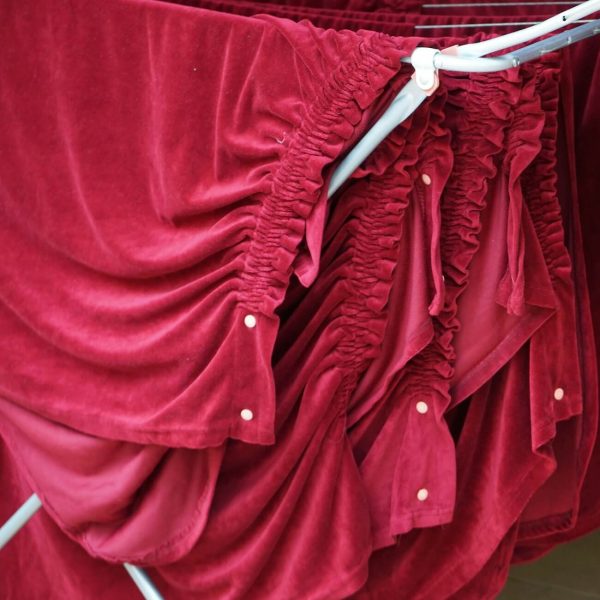
Steam revives flattened areas where you sat or where a bag strap pressed. Hang the garment, hold a handheld steamer a few inches from the fabric and work from the inside or back so the moisture pushes the pile up rather than down. Let it dry completely, then brush once more along the nap.
Keep a hot iron off the face of velvet. Pressing it flattens the pile into shiny patches that may never recover. If a seam or hem truly needs pressing, lay the garment face down on a thick, folded towel and press lightly from the back at the lowest setting the fiber allows.
Steaming also freshens a piece that smells of a crowded room. Airing it overnight by an open window, out of direct sun, often finishes the job without any cleaning at all.
Blot spills before the pile sets around them
Blot a fresh spill with a clean white cloth, pressing straight down. Rubbing twists the pile and spreads the stain, leaving a patch that looks crushed even once it's clean.
On washable polyester velvet, dab a water-based spill with a cloth dampened in cold water, then brush the area along the nap and let it air-dry. On silk or rayon velvet, water itself can leave a ring, so take the piece to a dry cleaner soon and say what was spilled. Oily marks from makeup, food or lotion belong with a cleaner on any velvet, since home rubbing tends to push oil deeper into the pile.
Hand-wash sequined pieces inside out
Wash a sequined garment by hand only when its label allows washing. Turning it inside out protects the sequins from rubbing against each other and against the basin.
- Turn the garment inside out and close any zippers or hooks so they can't snag.
- Fill a basin with cold water and add a small amount of mild detergent made for delicates.
- Submerge the piece and swish it gently for a few minutes, without scrubbing or squeezing.
- Drain and rinse in fresh cold water until no suds remain.
- Press the water out against the side of the basin, then roll the garment in a towel; never wring or twist it.
- Lay it flat on a dry towel, smooth it into shape and leave it away from heaters and sunlight.
Skip the dryer and the iron. Heat can warp or dull plastic sequins and soften the glue that holds some of them. To relax creases on a piece with sewn-on sequins, steam from the inside with the nozzle well away from the fabric; skip steam if the sequins are glued. For a single mark, dab around the sequins with a damp cloth rather than washing the whole piece. If the label points to dry cleaning, ask the cleaner whether they handle sequins, since some solvents can damage certain finishes.
Hang velvet loosely and fold heavy sequins flat
Hang most velvet on padded or wide hangers with space on either side. When other clothes press against it for months, the pile crushes and shows marks where the pressure sat.
Fold heavy sequined dresses instead of hanging them, because the weight drags on shoulder seams and straps over time. Fold them inside out with acid-free tissue between the layers so sequins don't catch on each other. Lighter sequined tops can stay on padded hangers.
The storage spot matters as much as the hanger or the fold, so set up these conditions before the season ends:
- Clean everything first, since food traces and body oils darken with time and silk velvet can attract clothes moths.
- Use breathable cotton garment bags; plastic bags from the dry cleaner trap moisture.
- Choose a cool, dry, dark closet, because light fades silk and deep colors.
- Refold folded pieces along different lines every few months so creases don't set.
Ahead of the next party, take the piece out a day early and hang it in the bathroom while you shower: the warm, damp air lifts creases from velvet, and any sequins that worked loose in storage are easier to spot and resew before you wear it.