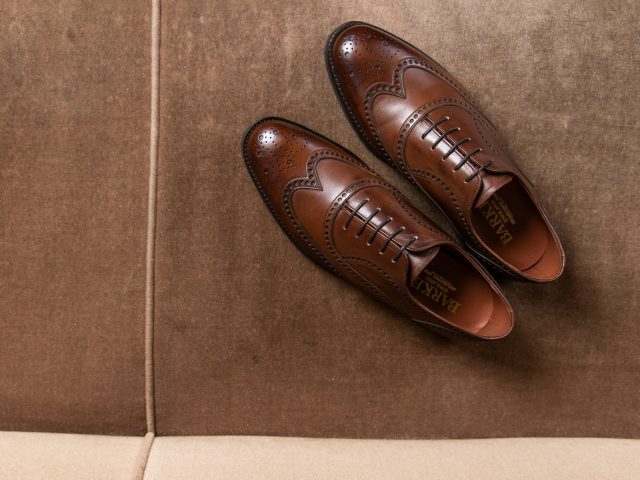
The invitation says "festive attire," the suit is pressed, and the last open question is on your feet. For most holiday parties the choice is between two lace-ups that look alike at a glance: men's oxford shoes, with closed lacing, and derbies, with open lacing.
The short answer: a sleek black oxford is the safer pick when the party leans formal or you're in a dark suit. A derby makes more sense when the dress code is relaxed, the outfit includes tweed, flannel or chinos, or your feet are wide or high in the instep.
Where the laces sit decides the look
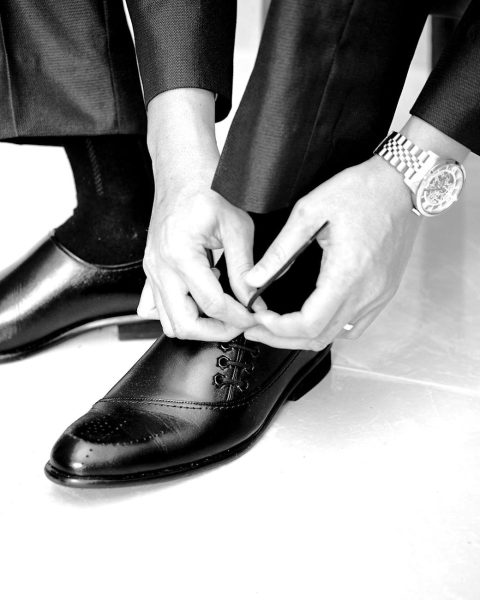
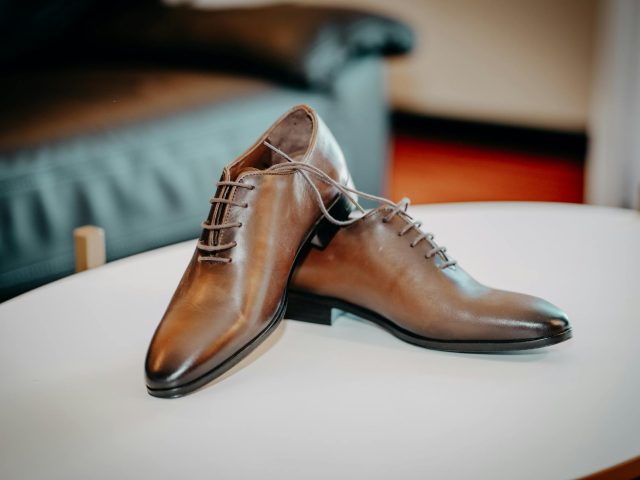
The difference is in how the upper is built, and it has nothing to do with toe shape or color. On an oxford, the two leather panels that carry the eyelets, called the quarters, are stitched underneath the vamp, the piece that covers the front of your foot. Laced up, they close into a neat V or sit almost flush.
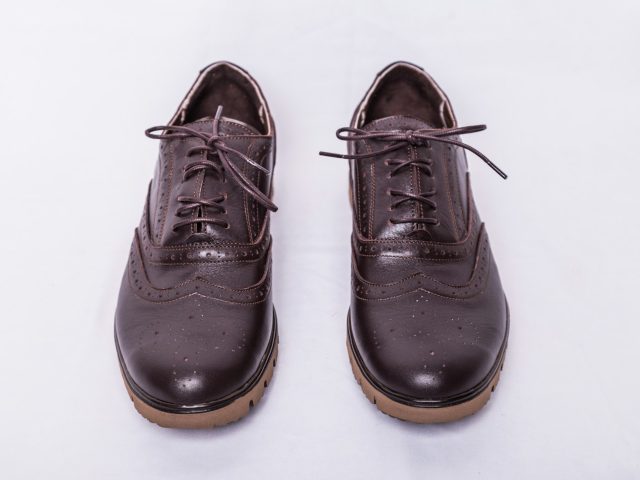
On a derby, the quarters are sewn on top of the vamp. They open like flaps and leave a gap you can widen or tighten with the laces.

That small detail changes how each shoe reads from across a room. The closed oxford has a slimmer, cleaner line over the instep, which is why it became the standard for business and formal clothes. The derby looks sturdier and a little more relaxed, which fits the common account that it began as a 19th-century hunting and field shoe.
Decoration can shift either style. Brogueing, the punched holes along the seams, makes any shoe more casual, and a wingtip pattern more so. A full-brogue oxford in tan can end up less formal than a plain black derby polished to a shine, so judge the whole shoe before deciding it's "dressy enough."
Oxford and derby side by side
The attributes that matter for an evening outfit stay the same from one maker to the next, so they're worth comparing directly.
| Oxford | Derby | |
|---|---|---|
| Lacing | Closed: eyelet panels stitched under the vamp | Open: eyelet panels stitched on top of the vamp |
| Profile over the instep | Slim and sleek | Fuller and sturdier |
| Formality | Higher; plain or cap-toe black is the formal benchmark | Lower; sits between business and smart casual |
| Fit over a high instep | Little room to adjust; can pinch | Laces open wider, easier to adjust |
| Clothes it pairs with | Dark suits, tuxedos, sharp dark trousers | Flannel, tweed, corduroy, chinos, sport coats |
| Leathers that suit evening | Polished calf, patent | Calf, suede, pebble grain |
Formality works as a scale rather than a verdict on which shoe is better. Leather oxford shoes in smooth black calf sit at the dressy end, and black patent goes further still. A suede derby sits near the casual end, and a polished calf derby lands in between, which is why it's so useful at parties where the dress code is loose.
Color moves both shoes along that scale too. Black is the most formal, dark brown and oxblood come next, and light tan reads daytime and casual, which looks out of place at an evening event with suits.
Match the shoe to the invitation's dress code
Holiday invitations use a handful of dress codes, and each points to a fairly clear choice of dress shoes for men.
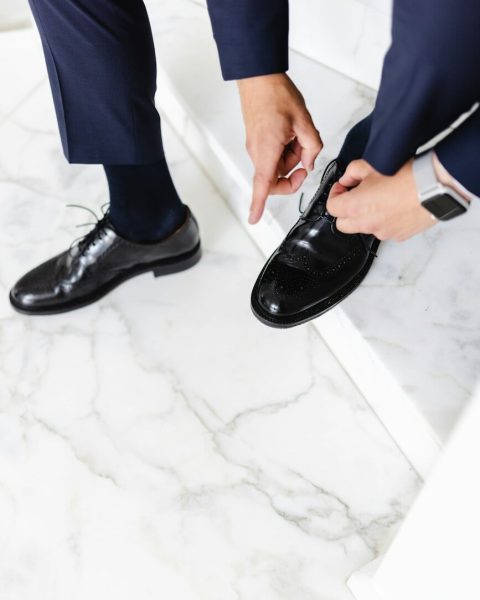
- Black tie: wear black oxfords, ideally plain-toe patent leather or calf polished to a high shine. A derby looks clunky next to a tuxedo, and brown has no place here.
- Formal or cocktail: black oxford shoes with a cap toe or plain toe suit a charcoal or navy suit. A dark brown oxford works with navy at a less strict event, though black is the safer bet after dark.
- Business casual or office party: either style works. A dark brown derby with gray trousers and a blazer looks put-together without seeming overdressed next to colleagues in sweaters.
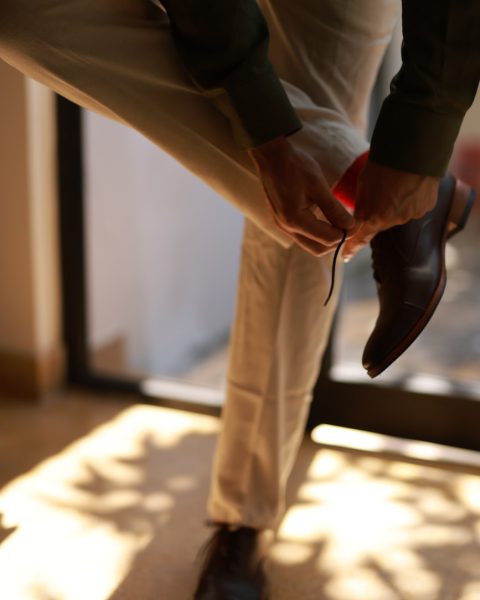
- Festive, creative or house party: men's derby shoes are the better fit. Brown derby shoes in suede or grained leather sit well with tweed, a velvet jacket, a roll-neck sweater or dark chinos.
When the invitation gives no dress code at all, dress one notch above what you expect most guests to wear. An oxford with a dark suit rarely looks wrong at an evening party, while a casual derby can look underdressed at a restaurant dinner or a formal company event.
Watch your trousers too. Slim, sharply creased trousers suit the narrower oxford, and heavier cloth such as flannel or corduroy balances the bulk of a derby. Pair a chunky derby with a slim tuxedo trouser and the shoe looks oversized.
Fit, winter sidewalks and a long night standing
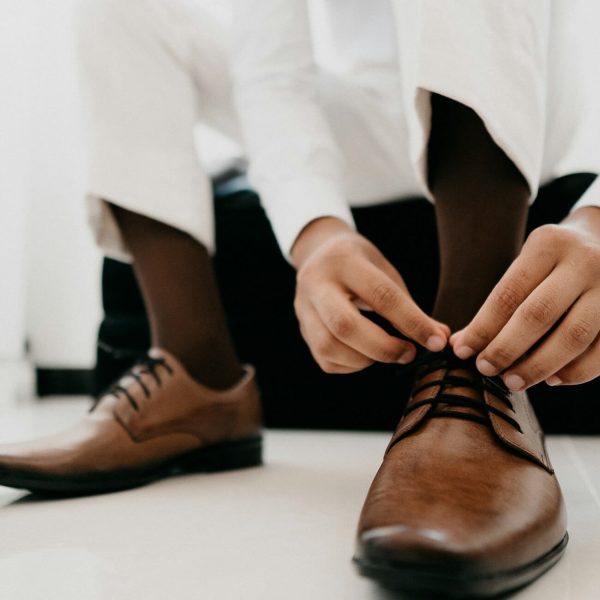
Comfort can settle the choice. If you have a high instep, wide feet or wear thicker socks in winter, a derby's open lacing gives you room that an oxford can't. Forcing an oxford closed over a high instep leaves the lacing gaping open in a wide V and presses on the top of your foot after a few hours.
Weather is the other factor. Many dress oxfords have thin leather soles that grip poorly on wet floors and icy sidewalks, and road salt leaves white tide marks on leather. Some derbies come with thicker or rubber soles, which help if you're walking from a train or parking a few blocks away. Check the sole before buying if your party season means snow.
If you prefer the oxford anyway, wear boots for the trip and change at the door. Wipe off any salt with a damp cloth as soon as you can, then let the shoes dry away from a heater, since direct heat dries and cracks leather.
New shoes need breaking in. A stiff heel counter can rub a blister within an hour of standing and dancing, so don't wear an untried pair for the first time on the night itself.
If one pair has to cover every party
If you wear suits even a few times a year, buy a black cap-toe oxford in smooth calf. It handles black tie at a pinch, every cocktail party and the office, and it looks just as right at a wedding or a funeral the rest of the year.
If you almost never wear a suit and your evenings run to blazers and chinos, a dark brown derby in calf or suede will see more use. It dresses up a sweater and dresses down a sport coat, and it handles winter sidewalks better than a thin-soled oxford.
Whichever pair you choose, polish it the day before the party rather than the hour before, so the wax has time to set and buffs to a proper shine.