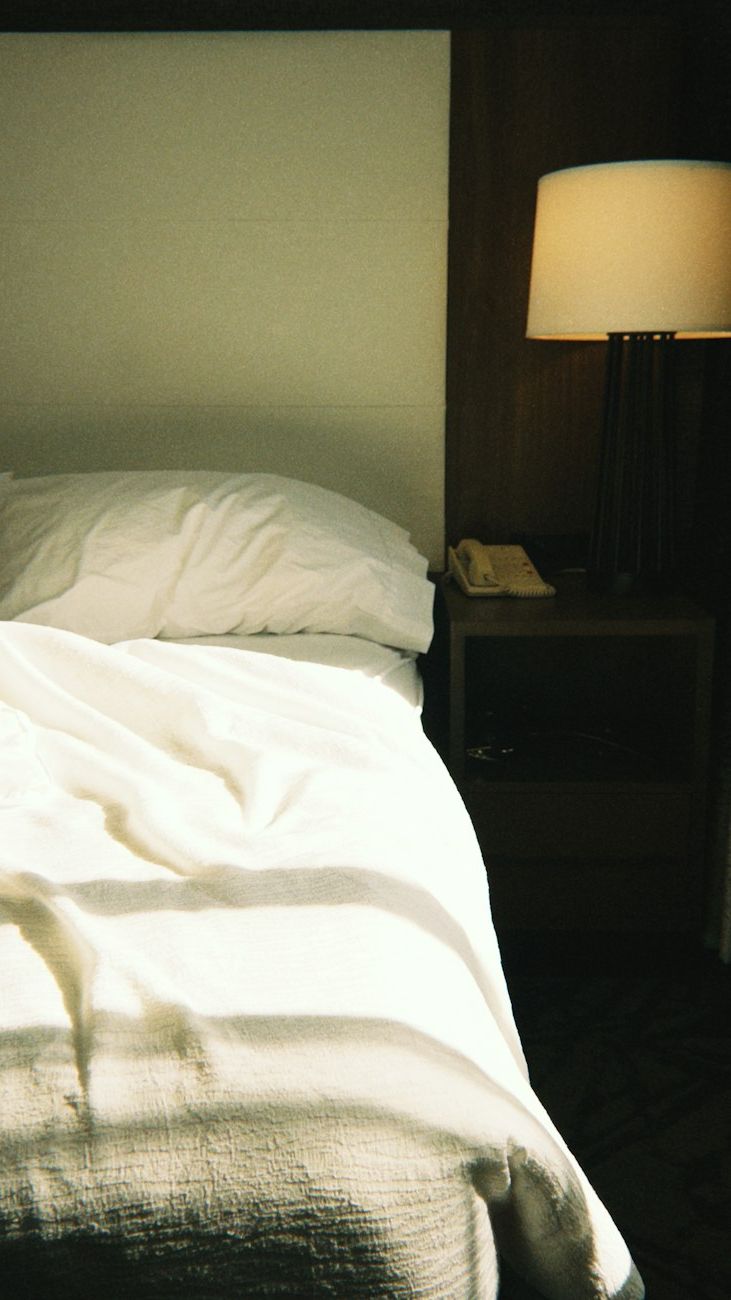
How to Style a Calm Winter Bedroom
How to Style a Calm Winter Bedroom
Once it gets dark before dinner, a bedroom set up for summer starts to look bare: thin sheets feel cold when you climb in, and one bright ceiling light does all the work until bedtime.
A calm winter bedroom follows the logic of a winter outfit. Start with sheets that suit how warm you sleep, then add texture in layers, the way a jumper and a coat go over a shirt.
Choose sheets by how warm you sleep
Sheets touch your skin all night, so pick the fabric for comfort before colour.
Choose flannel if you get into bed cold. Cotton flannel is brushed to raise a soft nap, and that fuzzy surface holds a thin layer of air, so the sheets feel warm as soon as you lie down. The look is casual, like a flannel shirt, and suits a room full of wool and knits.
Cotton percale suits you if you sleep warm but want a crisp bed. Percale is a tight, plain weave with a matte finish and a cool, smooth feel, much like a good poplin shirt, so it keeps a heavy duvet from feeling stuffy.
Linen suits anyone who tends to overheat under a winter duvet. Woven from flax fibres, it absorbs moisture and dries quickly. It feels slightly coarse at first and softens with washing, and its natural creases give the bed a lived-in look.
Gather the layers before you make the bed
Beyond the sheets, a layered winter bed needs a few more pieces.
- A light quilt or coverlet to sit between the flat sheet and the main cover
- A duvet in a cover, warm enough for your room
- One or two throws in a heavier texture, such as chunky knit or wool
- Two sleeping pillows, plus pillow shams or one or two cushions
- A rug beside the bed if the floor is bare
Lay everything out in daylight first, the way you'd try on a new outfit before wearing it out. Pieces that look right alone sometimes clash together.
Layer the bed from the sheets up
Work from the mattress up, folding the top layers back so each one shows a strip of its texture.
- Smooth the base. Pull the fitted and flat sheets tight so the top layers lie flat.
- Add the light layer. Spread the quilt or coverlet over the flat sheet and tuck it in at the foot; on mild nights it's enough on its own.
- Fold back the main cover. Lay the duvet on top and fold its top edge down to show the quilt and sheet, like a shirt collar over a jumper.
- Place the throw. Fold it in a band across the foot of the bed for a tailored look, or drape it over one corner.
- Finish with pillows. Stand the sleeping pillows against the headboard and stop at one or two cushions in front, so the bed stays quick to make.
Contrast keeps layers from looking heavy, as it does in clothes. Crisp sheets under a chunky knit throw work like a cotton shirt under a cable-knit jumper, while fleece piled on faux fur blurs into one fuzzy mass.
Keep the palette as narrow as a winter wardrobe
A calm room runs on fewer colours than you'd expect. As a rough guide, pick one main neutral for the sheets and duvet cover, a deeper shade of it for the throw, and one accent at most.
The colours of winter knitwear carry over well to a bed: cream, oatmeal, camel, charcoal, forest green and burgundy all look warm in weak daylight.
Stark bright white and icy blue look colder in a room with little winter sun, so choose ivory or a creamy white if you love a pale bed. Keep pattern to one or two pieces, such as a check on a cushion, so your eye rests on texture.
Light the room low and keep surfaces clear
Winter evenings are long, and bright overhead light flattens soft bedding. After dark, switch off the ceiling light and use a lamp on each bedside table plus one across the room, so light comes from more than one spot. Fabric shades soften the glow, and bulbs labelled warm white give a yellower tone that suits winter colours.
Swap sheer summer curtains for heavier lined ones in velvet or a wool blend. They make the windows look warmer and cut the glare from street lamps.
Small objects finish the room when there are only a few. A short stack of books and a vase of bare branches are enough for a bedside table. Give your accessories a home too: a tray on the chest of drawers for rings and a watch, and a bench at the foot of the bed for the folded throw and tomorrow's outfit.
Mistakes that make a winter bedroom feel busy
Cut the pile of decorative cushions you move every night. If they end up on the floor each evening, the bed looks staged by day and messy by night.
A bed where every piece shares one matching print looks flat. A solid sheet under a textured cover gives the layers depth, the way a plain jumper sets off a patterned scarf.
Several heavy blankets make the bed hard to make each morning, while a warmer duvet plus one throw does the job with less bulk.
A crowded bedside table undoes careful bedding because it's the first thing you see from the pillow. Give cords and loose papers a drawer or a lidded box.