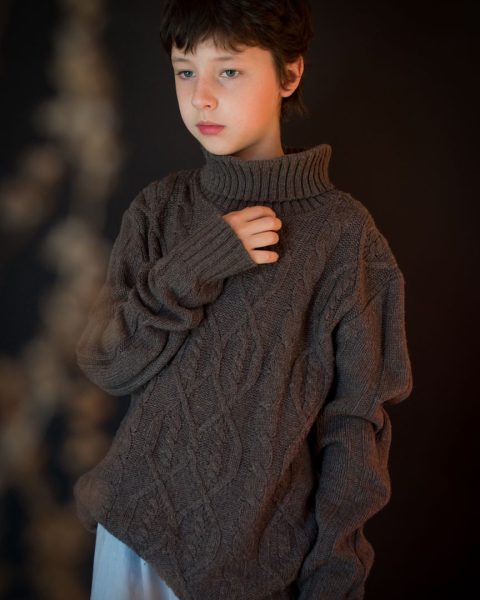
A boy who spends the family photo tugging at his collar is reacting to something real: a coarse yarn or a stiff seam genuinely prickles. Whether a holiday sweater stays on him depends on three things: the fiber it's made from, how the knit is built on the inside, and what he wears under it.
All of that can be checked before you buy, on the label, by turning the sweater inside out, or in the product photos and description. The festive pattern on the front matters far less to his comfort than the inside.
Why thick fibers prickle and fine ones don't
Itch from knitwear is mostly mechanical. Short fiber ends stick out of every yarn, and when those ends are thick and stiff, they press into the skin instead of bending away. Fine fibers flex on contact, so the same knit made from finer wool feels smooth.
Wool fiber thickness is measured in microns, and as a rough guide, wool finer than about 20 microns feels soft to most people, while yarns with many fibers above about 30 microns tend to prickle. Clothing labels rarely list microns, so the fiber name does the work. Merino is generally finer than ordinary sweater wool, though grades vary. Lambswool, from a sheep's first shearing, is softer than wool from the same animal later on, but it can still bother a sensitive child.

An itchy wool sweater usually fails for this reason, yet wool isn't the only culprit. Cheap acrylic can feel stiff, and synthetic yarns trap heat, so a boy who runs around a warm living room gets sweaty, and damp skin itches. Kids with eczema or winter-dry skin notice all of this sooner; if a rash appears wherever the sweater touches, that's a question for his pediatrician rather than a fabric problem to solve.
Which fibers feel soft and what each one costs you
US law requires most clothing to carry a label listing fiber content by percentage, so you can read it on the tag or find it in an online product description. Each common option trades comfort against price or convenience.
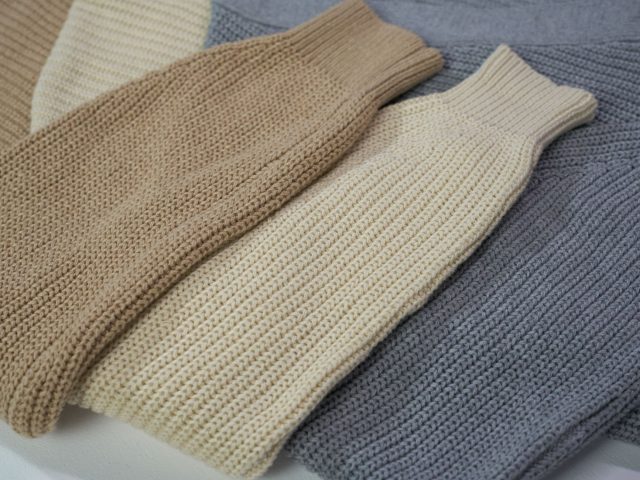
- Cotton is soft, rarely irritates, and usually goes in the washing machine. It's less warm than wool, can stretch out at the cuffs, and a thick cotton knit takes a long time to dry.
- Merino is warm, soft and handles a sweaty kid better than synthetics. It costs more, and unless the label says superwash or machine washable, it needs gentle care to avoid shrinking.
- Acrylic and polyester are the cheapest and are usually machine washable. They pill quickly, hold heat, and the softness of a new acrylic sweater often fades after a few washes.
- Blends such as cotton-acrylic or wool-nylon sit in between; the fiber listed first, with the highest percentage, decides how the sweater feels.
For a sweater worn a handful of times in December and outgrown by next year, a cotton or cotton-rich blend is the best value. Merino earns its price only if he'll wear the sweater all winter, not just to holiday events. Cashmere is soft, but paying for it in a size he'll outgrow within a year rarely makes sense.
The scratch often hides in the novelty details
Turn any patterned sweater inside out before deciding. Knitted-in designs, such as reindeer, snowflakes and Fair Isle bands, usually carry the unused colors across the back as loose strands called floats. They rub, and small fingers catch in them when he pulls the sweater on. A lining behind the design, or a pattern printed on rather than knitted in, avoids the problem.
Sewn-on appliqués and embroidery have a stiff backing on the inside that can chafe the chest. Sequins scratch most at the inner arms and underarms, and metallic yarn, often added for sparkle, feels wiry against bare skin.
Three-dimensional trim needs a closer look on sweaters for young children. Give pom-poms, bells and buttons a firm tug: anything that loosens could become a choking hazard. Light-up sweaters run on a battery pack that has to come out before washing, and if it uses small button batteries, the compartment should close with a screw, because those batteries are dangerous if swallowed.
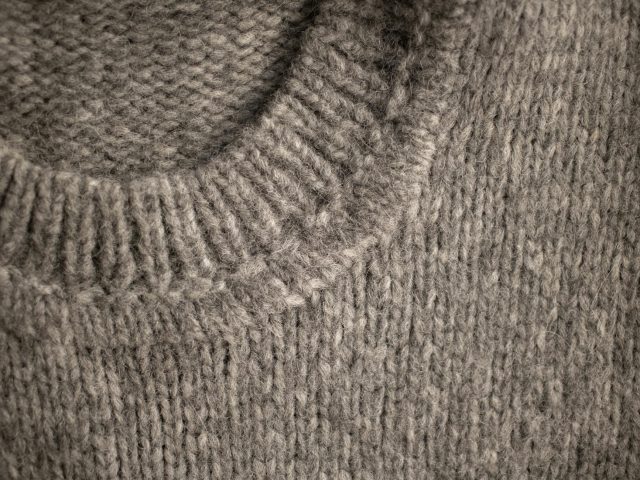
Check the neckline and the tag too. A tight ribbed collar is the first thing a boy complains about, and the neck trim is sometimes knitted from a coarser yarn than the body. If you cut out a sewn-in label, cut along the seam: a stiff stub left behind scratches more than the whole tag did.
Layers and vests that keep knit off his skin
A thin long-sleeve cotton tee or turtleneck underneath means the sweater touches fabric instead of skin, which rescues even a scratchy hand-me-down. Size up slightly if he'll always wear it layered.
A holiday sweater vest over a collared shirt solves the problem another way. The knit never reaches his arms or neck, he stays cooler at an indoor party or school concert, and the shirt underneath can be washed after every wear. The trade-off is warmth: a vest won't do much outdoors.
For a boy who refuses knitwear altogether, a sweatshirt with a printed holiday design is fleece-soft inside and survives the washing machine. Washing any new sweater before the first wear can also soften stiff finishing, though it won't turn a coarse yarn into a fine one.
Five checks before you pay
A few quick tests catch problems that a label and photos can miss.
- Rub the inside of the sweater against your inner wrist or the side of your neck for a few seconds; if it prickles you there, it will prickle him.
- Read the care instructions and be honest about your laundry routine: hand wash only usually means it ends up worn once.
- Have him try it on over the shirt he'll actually wear, and raise his arms to check the hem doesn't ride up.
- Look at sleeve length; an inch of room to grow is fine, but cuffs that cover his hands get pushed up and stretched.
- Check whether the sweater can still be returned after tags are removed, since some kids only complain after an hour of wear.
If you're heading to a party in a new sweater he hasn't worn for long, pack a thin long-sleeve tee in the bag so he can change layers before the itching ruins his evening.