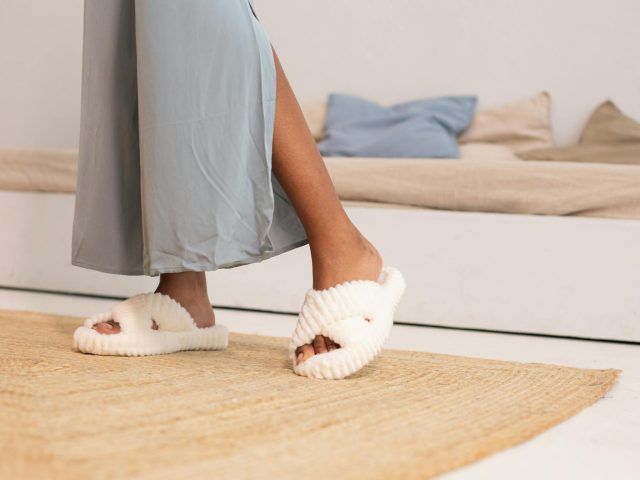
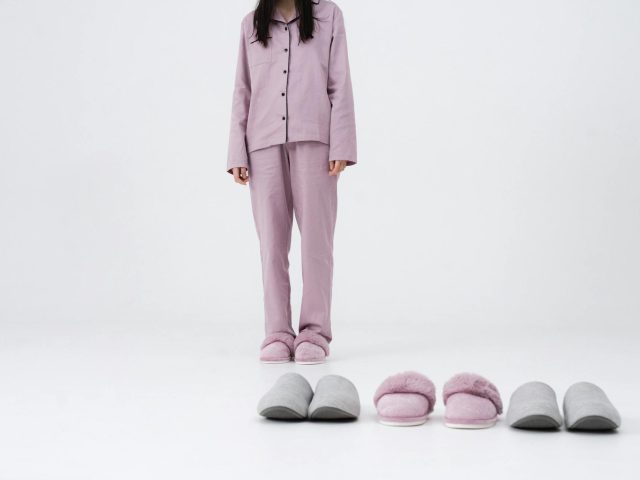
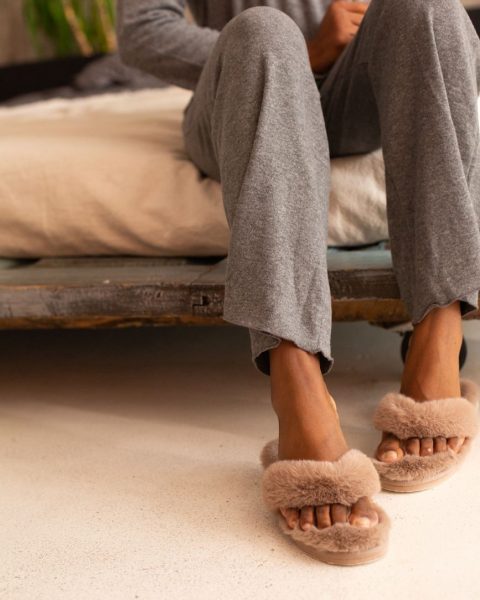
Cold tile at 6 a.m. tells you quickly whether your slippers are up to winter. Three common shapes of women's slippers for the cold months are slipper boots that cover the ankle, backless mules, and moccasins with a low upper that wraps the heel.
Each one trades warmth against convenience in its own way. The right pair depends on your floors, your stairs and how often you step outside in them.
How the three styles compare
How much of the foot a style covers decides how warm it feels, and whether it has a back decides how steady you are. These ratings assume a decent lining and sole in each style.
| Style | Warmth | Stays on | On stairs | Quick trips outside |
|---|---|---|---|---|
| Slipper boots | Highest; the ankle is covered | Very secure | Steady if the sole grips | Good with a rubber sole |
| Mules | Lowest; the heel is open | Least secure | Least steady | Possible on flat ground with a hard sole |
| Moccasins | Moderate; heel covered, ankle open | Secure once broken in | Steady with a firm sole | Only hard-sole versions |
Lining and sole can outweigh shape. A sheepskin-lined moccasin can feel warmer than a thin fleece bootie, and a mule with a molded rubber sole grips a wet kitchen floor better than a boot with a soft fabric bottom. Narrow down the style first, then judge any pair by what touches your foot and what touches the floor.

Those two details also decide how long a pair lasts. A thin lining packs flat within a season, and a soft sole worn on concrete or a driveway can wear through just as fast.
Slipper boots keep ankles warm on cold floors
Slipper boots reach the ankle or higher, so floor-level drafts never hit bare skin and the shaft traps warm air around the foot. If you spend long evenings on the couch or work at a desk in a house kept cool, this is the style that keeps you comfortable without a blanket over your feet.
Enclosed boots can make feet sweat, and synthetic linings such as polyester fleece hold that moisture against the skin. Sheepskin and wool handle it better because the fibers absorb moisture and release it again. They cost more, but your feet stay drier through a long evening.
Fluffy women's slippers in boot form, with faux-fur cuffs or a shaggy outer, look warmer than they are. The lining against your foot matters more for warmth than the pile on the outside. Long synthetic pile also tends to mat after a few trips through the washer, so check the care label if you plan to wash them often.
Look at the sole before anything else. Many slipper boots have a soft fabric or suede bottom that slides on hardwood and wears through on pavement. If you take out the trash or grab the mail in your slippers, choose a rubber sole with some tread.
Mules slip on fast but are less secure and cooler
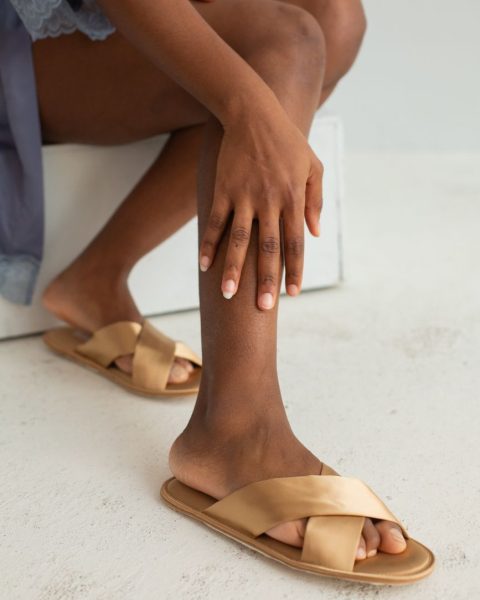
Slipper mules for women suit anyone who is in and out of them all day: stepping in from bed, kicking them off at the couch, swapping them for shoes at the door. With no back, there's no bending down and no crushed heels.
That open back is also their main limit. Heat escapes around the heel, so mules feel cooler than boots on the same floor, and your toes grip slightly to keep them on. The resulting shuffle is harmless on a flat floor but riskier on stairs. Fall-prevention advice for older adults generally recommends closed-back slippers with firm, non-slip soles, which makes a mule a poor choice for anyone who already feels unsteady or lives with steep stairs.
Fit matters more with a mule than with the other two styles. Your whole foot should sit on the footbed with the heel inside the back edge; if the heel hangs over or the toe area is loose, the slipper flips off as you walk. A contoured footbed and a snug band across the instep hold the foot better than a flat, wide-open upper.
If your feet run warm, a mule's openness becomes an advantage. On the coldest days, socks add some warmth without closing the foot in.
Moccasins mold to your foot over time
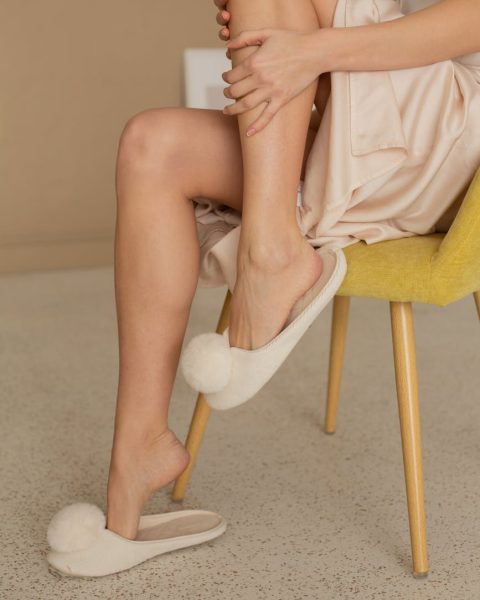
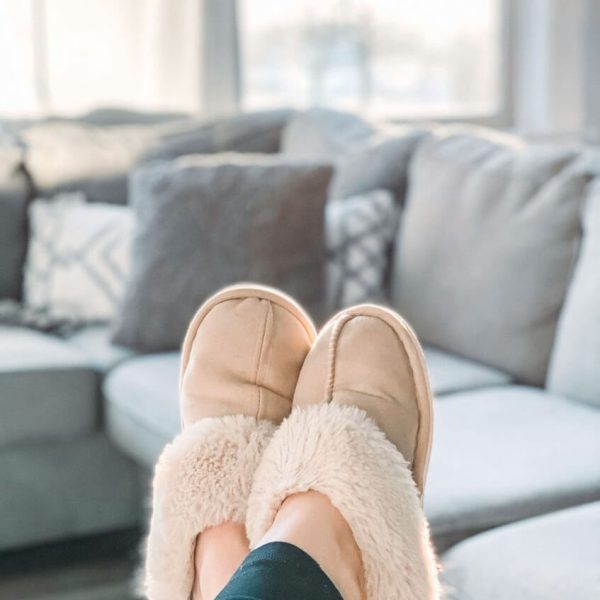
A traditional moccasin is made from one piece of leather that wraps up from under the foot, with a separate panel stitched on top. Slipper versions borrow that shape and usually add a lining and often a separate sole. Moccasins for women sit in the middle of this comparison: the covered heel keeps them on and holds in more warmth than a mule, while the open ankle keeps them cooler than a boot.
Leather and suede stretch and shape to your foot with wear, so buy them snug. That goes double for sheepskin linings, which compress over the first few weeks; a pair that feels roomy when new usually ends up loose.
Suede women's slippers need some care to last. Suede stains and stiffens when it gets soaked, so a suede protector spray before the first wear helps, and a wet pair should air-dry away from a heater and get a brush once dry. Keep them out of the washer unless the care label says otherwise.
Decide on the sole early. Soft-sole moccasins feel closest to barefoot and stay quiet on wood floors, but they wear quickly and give no grip outside. Hard-sole versions are stiffer at first and handle a dash to the car or a damp porch.
Match the style to your house and habits
Your floors and your routine point to the right style faster than any trend does.
- Cold floors and long hours sitting: a slipper boot with a wool or sheepskin lining.
- Constantly on and off in a one-level home: a mule with a contoured footbed and a rubber sole.
- Stairs, or someone prone to falls: a closed-back moccasin or boot with a firm, non-slip sole.
- Frequent trips to the mailbox or car: a boot or moccasin with a hard rubber sole.
- Feet that run hot: a moccasin or mule in natural fibers instead of a fleece-lined boot.
Check how the sizes run before ordering. Many slippers come in paired sizes such as 7-8, so check the brand's size chart and, if you fall between sizes, think about the socks you'll wear and whether the lining will compress with wear.