By the time the turkey, two kinds of stuffing, a gravy boat and three casseroles arrive, a carefully styled Thanksgiving table can run out of room fast. The fix is to plan the table around the dishes rather than the decorations: measure what has to land on it, give each guest a compact setting, and keep anything decorative low and narrow enough to move.
Most of the work can happen the day before, when you can still shift a chair or swap a platter without gravy cooling on the stove.
Gather everything before you set a single plate
Lay out what you plan to use on a counter first, so you can see the full load before any of it reaches the table.
- A tape measure, for the table and your largest platters
- A pressed tablecloth or runner
- Plates, flatware, glasses and napkins counted per guest, plus a couple of spares
- Trivets or hot pads for every dish that comes straight from the oven
- One serving spoon or fork per dish, so nobody borrows from their own place
- A side table, sideboard or cleared stretch of counter for overflow
Thanksgiving tablecloths in deep orange, brown or plaid hide cranberry and gravy spills better than white linen. Aim for an overhang of about 6 to 8 inches on every side. A long, formal drop looks elegant, but it gets tugged each time someone pulls in a chair, and that's how full glasses tip.

Set the Thanksgiving table in this order
Working from the bare table outward keeps you from setting places you'll have to clear again.
- Measure the table and the food. Note the length and width, then set your biggest platters and dishes on it empty, roughly where they'll sit during the meal. If they barely fit before any plates arrive, decide now which dishes go to a sideboard or counter.
- Lay the cloth or runner. A Thanksgiving table runner gives you a decorative strip down the middle while leaving the edges clear for plates. As a rough guide, a runner about a third as wide as the table leaves room for dishes on either side; a wider one turns the center into a display shelf.
- Space the chairs. Allow roughly 24 inches of table edge per guest as a starting point. Squeeze much tighter and elbows collide when everyone starts cutting turkey at once.
- Set each place compactly. A basic table setting puts the dinner plate in the center, forks to the left, the knife to the right with its blade facing the plate, the spoon beside the knife and the glass just above the knife. The napkin goes on the plate or to the left of the forks. A formal table setting chart may add salad plates, bread plates and several glasses, but on a crowded holiday table you can drop whatever nobody will use. A water glass and one other glass are plenty.
- Add the centerpiece. Place it down the middle only after the settings are in, so you can see exactly how much width is left.
- Put down the trivets. Set them where the hot dishes will go before guests sit, so each casserole has a landing spot waiting and nobody juggles a hot pan over the plates.
Keep the centerpiece low and easy to move
A Thanksgiving table centerpiece should stay below the eye line of seated guests so people can talk across it, and narrow enough to sit within the runner. Small pumpkins, gourds, pears and short sprigs of greenery work well because you can slide them aside or lift them off when the platters come out.
Split the arrangement into several small clusters instead of one long garland. That way you can clear a gap exactly where the turkey or the potatoes need to go.
If you use real candles, keep them in stable holders away from dried leaves, wheat and paper, and choose unscented ones so they don't compete with the food. Battery-powered candles avoid an open flame near arms reaching for the stuffing.
Move some of the food off the table
Carving the turkey in the kitchen frees the space a whole bird and its platter would take; bring the sliced meat out on a smaller plate. Pitchers, extra rolls and desserts can wait on a sideboard or counter until someone asks.
For a large group, consider serving the main dishes buffet-style from the kitchen counter. Guests fill their plates there, and the table holds only the place settings plus the things people reach for during the meal: gravy, salt, pepper and butter.
Mistakes that crowd the table
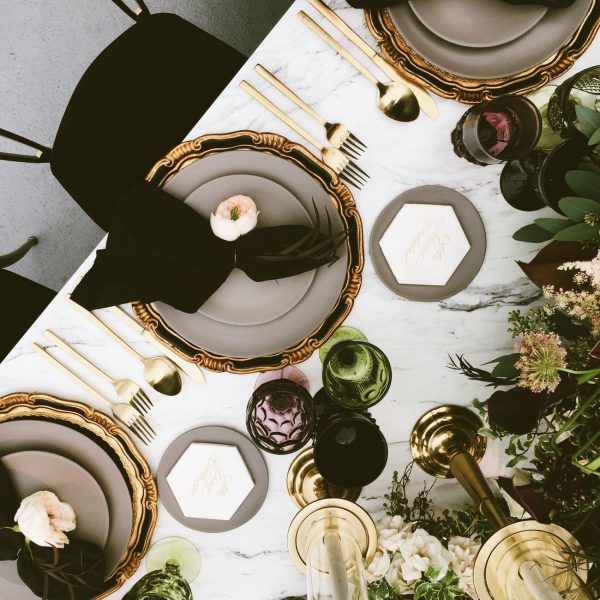
Copying every piece from a formal setting is the quickest way to lose space. Chargers are wider than dinner plates, so they widen each place, and bread plates and extra glasses push the settings further toward the center.
Tall arrangements cause a different problem. Guests end up shifting them to see each other, and they land wherever there's a gap, usually where a dish was meant to go.
Forgetting serving utensils and trivets crowds the table in a less obvious way. Hot dishes end up on folded towels, and spoons get balanced on the edges of bowls, both of which take more room than the right tool would.
Finally, keep place cards and small favors off the plates themselves, or tuck them where they can be pocketed at once. Otherwise they pile up beside each setting once the food starts moving.
Tonight, put your largest platter on the empty table and see how much room is left around it. Everything else follows from that answer.