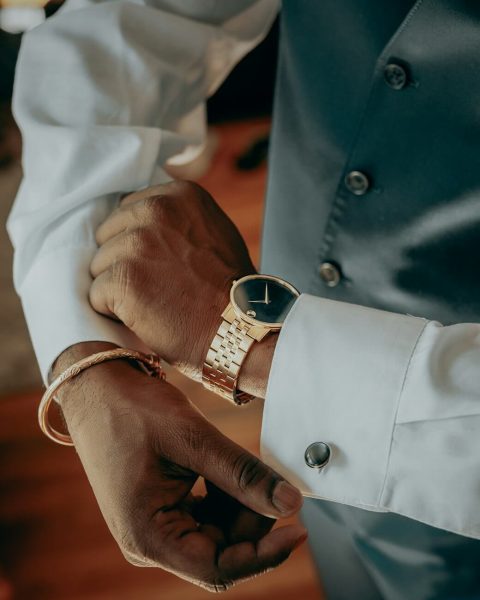
An invitation that says "festive attire" or "black tie" sends plenty of people to the drawer for the cuff links they last wore at a wedding, only to find that their best dress shirt has buttons at the wrist. Cuff links need a shirt with buttonholes on both sides of the cuff, so the shirt is the first decision.
Once the shirt is right, the rest follows from two things you already know: how formal the party is, and which metal your watch and belt buckle are made of.
Look for buttonholes on both sides of the cuff
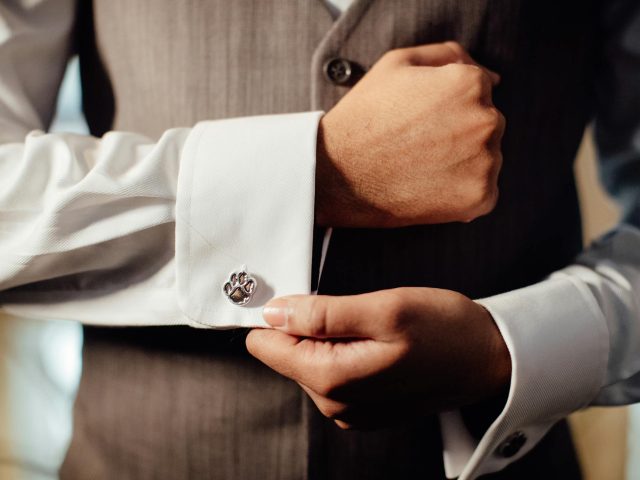
French cuff shirts are the classic match. The cuff is roughly twice the usual length and folds back on itself, which lines up four buttonholes and leaves no button at all. Without links, the cuff simply hangs open.
Convertible cuffs are the useful in-between. They look like an ordinary single cuff with a button, but there's a buttonhole on the button side as well, so you can either button them or pass a link through both holes. If the button sits close to that second hole, it can push the link out of line; a tailor can usually remove it.

Tuxedo shirts usually have French cuffs or a single cuff with a buttonhole on each side and no button, both meant for links. A standard barrel cuff, with a button on one side and a hole on the other, can't take them unless it's altered.
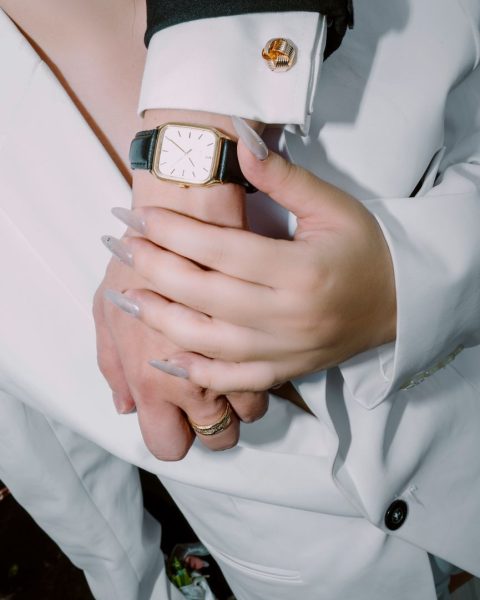
Cuff links for men get most of the attention, but many women's dress shirts and blouses come with French cuffs too, and they close the same way. Before the party, check the fit at the wrist: a folded French cuff is bulkier, and if you wear a watch, the cuff needs enough room to slide over it.
Press the cuff edges together so the insides touch
Fold a French cuff back so the crease sits just past your wrist bone. Then bring the two edges together so the inside faces touch and the edges point away from your wrist, like a small fin. Line up all four buttonholes and push the link through from the side that shows when your arms hang down, decorative face outward, then secure the back on the inner side.
Overlapping the edges the way a barrel cuff closes is a common mistake with French cuffs; it twists the fabric and hides half the fold. On a convertible cuff, overlapping is correct.
With a jacket on, aim for roughly a quarter to half an inch of shirt cuff showing below the sleeve. Any less and the links stay hidden; any more and the jacket sleeves look short.
The backing decides how easy they are to fasten
The hidden half of a link matters more than most people expect, especially when you're dressing in a hurry or your hands are cold. The common cuff link styles differ mainly in how they close:
- Toggle or bullet back: a small bar swivels flat after it passes through the holes. It's the easiest to manage with one hand.
- Chain link: two decorated ends joined by a short chain. It's the traditional form, sits a little looser and shows a face on both sides, but threading it takes patience.
- Fixed back: a rigid post with no moving parts. It's secure and durable, but it fits only cuffs whose buttonholes have enough give.
- Silk knots: two fabric knots joined together. They're light, colorful and inexpensive, and they read as casual.
If small parts are hard for you, a toggle back is the practical pick, and you can thread the links through one cuff before putting the shirt on. Chain links reward people who like the old-fashioned look and don't mind a minute of fiddling at each wrist.
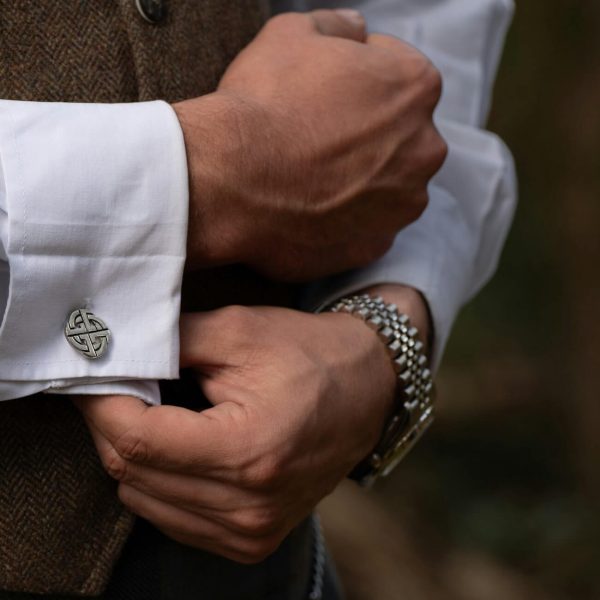
Let the invitation set how loud the links can be
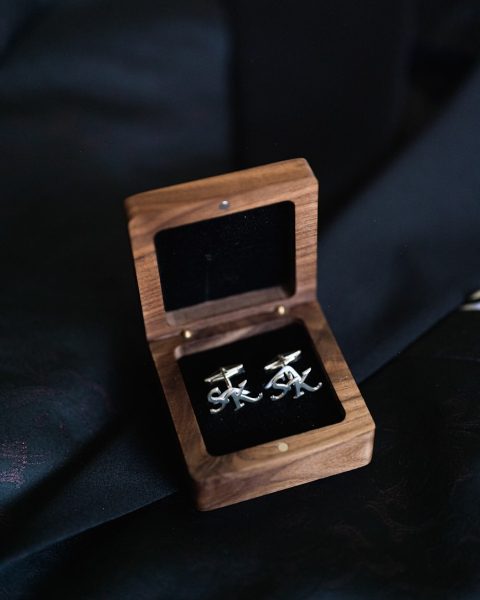
Black tie calls for restraint. Small links in onyx, mother-of-pearl or plain polished gold or silver suit a tuxedo, and if the shirt front takes studs, links and studs that match look deliberate. Bright enamel and novelty shapes fight with the formality of the outfit.
Cocktail parties and office holiday gatherings give you more room. Colored enamel, a stone that echoes your tie or pocket square, or a quiet seasonal motif such as a snowflake all work with a dark suit. Keep the face of the link smaller than the width of the folded cuff so it doesn't overhang the edge.
Novelty links, from reindeer to tiny ornaments, land best when they're the only joke in the outfit. Pair them with a plain white or light blue shirt and a solid tie, and save them for parties where an ugly-sweater spirit is welcome.
Gold cuff links look best when the other metals agree
Match the links to the metal you're already wearing: the watch case, belt buckle and tie bar, if you use one. Gold cuff links with a steel watch aren't wrong, but a single metal looks more finished, especially at a formal event where every detail is on view.
Gold has a warm tone that sits well with ivory or cream shirts and with navy or charcoal suits. Silver and steel feel cooler and suit crisp white shirts.
The marking tells you what the link is actually made of. A plain karat mark such as 14K or 18K points to solid gold. Marks such as GP or GEP, or the word plated, mean a thin layer over another metal, and it can wear through on the edges and on the post, where the metal rubs against the buttonholes each time you fasten it.
Fasten the links at home before the party and raise both arms above your head: if a link slips out or the cuff binds against your watch, you'll want to know while there's still time to switch shirts.