A boy who kicks off his blankets at 2 a.m. needs pajamas that keep him warm on their own, and the fabric does most of that work. Flannel, fleece and jersey all turn up in boys' pajamas sold for cold months, but they hold heat, deal with sweat and survive the wash in very different ways.
The short version: fleece for cold rooms and kids who sleep uncovered, flannel as the breathable middle ground, jersey for kids who run hot. Fit matters as much as fabric, because US safety rules tie the two together.
What flannel, fleece and jersey actually are
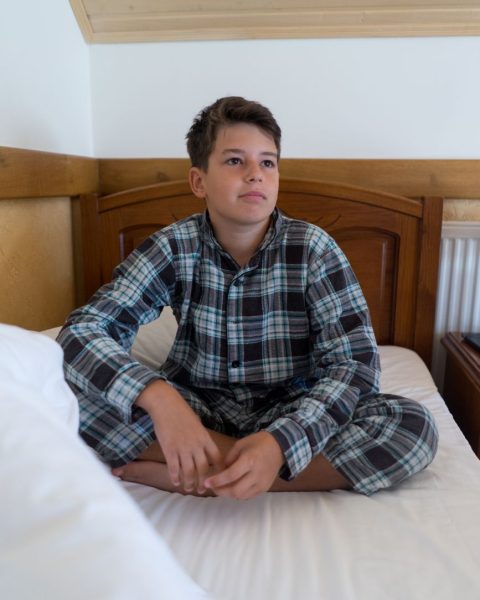
Flannel is a woven fabric, most often cotton, brushed on one or both sides so the fibers lift and trap a thin layer of air. It feels warm the moment it touches skin, yet it still breathes and soaks up sweat the way other cotton does. Weight varies a lot: thin flannel is barely warmer than a heavy T-shirt, while a thick, well-brushed one holds heat nicely. Because it's woven, it has little stretch.
Fleece is a knit, almost always polyester, brushed into a deep pile. For its weight it's the warmest of the three, which is why fleece pajamas dominate cold-weather racks. Moisture is its weak point: polyester absorbs very little, so a child who sweats in the night can wake damp and then chilled once he throws the covers off. Microfleece is a thinner version that's a little less stuffy.

Jersey is the knit used for T-shirts, usually cotton or a cotton blend. It stretches, moves with a restless sleeper and breathes well, but on its own it's the least warm. Its winter value comes from a close fit and from what goes on top: a blanket, a sleep sack for younger boys, or a heavier top layer. Some jersey is brushed on the inside, which adds a bit of warmth without the bulk of fleece.
Side by side: warmth, feel and wear
Weight and quality shift each fabric within its column, so a heavy jersey can beat a flimsy flannel.
| Trait | Flannel | Fleece | Jersey |
|---|---|---|---|
| Warmth | Moderate to high, depends on weight | High | Low to moderate |
| Breathability | Good | Poor | Good |
| Sweat | Absorbs it | Leaves it on the skin | Absorbs it |
| Stretch | Little | Some | A lot |
| Usual fit in kids' sizes | Snug, or loose if flame-resistant | Often loose | Snug |
| Static in dry air | Low | Can be noticeable | Low |
| Typical wear problem | Shrinking, nap thinning | Pilling and matting | Baggy knees and cuffs |
Pilling is the fleece problem most parents notice first. Cheaper fleece can turn bobbly after a handful of washes, especially at the knees and seat where a boy crawls and slides. Denser, smoother fleece holds up better, and you can feel the difference in the store: thin, loose pile tends to mat sooner.
Flannel ages the other way. It often gets softer with washing, but each wash also wears the brushed surface, and a much-washed set ends up thinner and cooler than it started. Jersey's weak point is shape: elastic cuffs loosen and knees bag out, and a snug-fit set that stretches loose no longer fits the way the safety rules intend.
Static deserves a mention for winter. In a heated house with dry air, a fleece set can crackle when pulled over the head, which some kids hate enough to refuse it.
Why most cotton pajamas fit snugly in the US
Federal flammability rules for children's sleepwear in sizes above 9 months up to 14 require pajamas to either meet a flame-resistance standard or fit snugly against the body. A close fit leaves less air between fabric and skin, so the garment is harder to ignite and burns less readily.

Polyester fabrics such as fleece can meet the flame-resistance requirement, which is why loose fleece pajamas are easy to find in kids' sizes. Cotton flannel and jersey are a different story. Most cotton sleepwear for children is cut snug and carries a yellow hangtag and a permanent label saying the garment should fit snugly and isn't flame resistant.
That label is a fitting instruction. Buying snug cotton pajamas two sizes up so he can grow into them gives you a loose cotton garment, the very thing the rule is designed to avoid. Buy his current size, and retire a set once washing has stretched it loose. If you want a roomy cotton set, check the label before buying.
Which fabric suits which sleeper
The right pick depends less on the thermostat than on how your son sleeps. Matching fabric to habit usually solves the nightly argument about being too hot or too cold.
- The blanket kicker in a cold bedroom: fleece. It keeps him warm with no covers at all, and a footed or one-piece style stops the top riding up as he turns.
- The kid who wakes up sweaty: snug jersey, with a blanket he can push off. His body heat escapes instead of building up under synthetic pile.
- Somewhere in between: cotton flannel. It feels warmer than jersey and breathes far better than fleece, so it suits most heated houses through the winter.
- Boys who dislike a tight fit: fleece, since loose cuts are common, or a looser flannel set labeled flame-resistant.
- Holiday photos and gifts: Christmas flannel pajamas, often in plaid, come in matching family sets, and the kids' sizes follow the same snug-fit or flame-resistance rule.
A jersey pajama set also makes a good second set for any boy. It handles the warmer nights that turn up in most winters and dries quickly when the main set is in the wash.
Washing and sizing so the warmth lasts
Cotton flannel and jersey can shrink when washed hot and dried on high heat, and a snug set that shrinks soon pinches at the wrists and ankles. Fleece doesn't shrink much, but high dryer heat can flatten and mat the pile, so it loses loft.
A few habits keep any of these sets warm and fitting longer:
- Wash in cold or warm water, inside out, to protect the brushed surface.
- Tumble dry on low, or hang fleece to dry.
- Follow the care label, since some flame-resistant fabrics come with specific washing instructions.
After the first wash and dry, check where the sleeves and legs land: if a snug cotton set has crept above his wrist and ankle bones, buy the next one a size up.