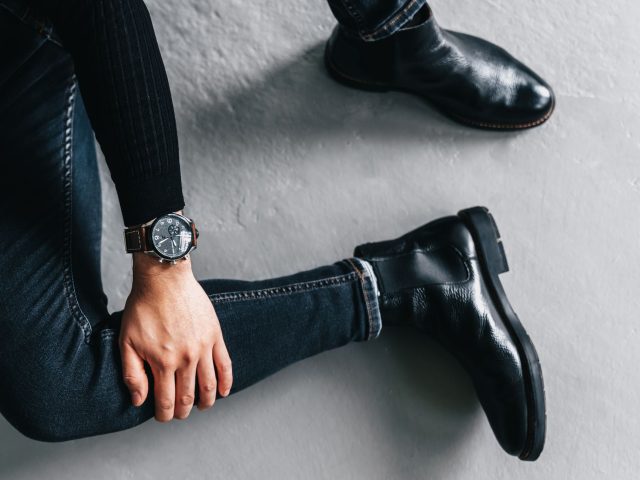
A pair of men's Chelsea boots that looks sharp in October can be ruined by January: salt lines across the toes, wet socks from a seeping elastic panel, a leather sole that skates on the first icy sidewalk. The style suits winter in other ways, since there are no laces to freeze and the boot slips on over thick socks.
What decides whether a pair gets through the season is the upper material, the construction behind the elastic and the sole. Settle how much water and cold your boots will meet before you look at colors, because that answer rules out half the options.
Start with the kind of winter you walk through
A commuter who walks ten minutes on plowed, salted streets needs something different from someone who waits at a rural bus stop or crosses unplowed sidewalks. For short city walks, a well-finished leather boot with a rubber sole and a protective cream handles slush and can still go to the office. If you spend longer outdoors or stand in slush at crosswalks, look at waterproof Chelsea boots with a lined interior and a lug sole.
Keep the shaft height in mind. Chelsea boots end at or just above the ankle, so snow deeper than a few inches gets in over the top whatever the boot is made of. If you regularly walk through fresh snow, a laced winter boot does that job better, and the Chelsea becomes your pair for cleared streets.

A sleek boot with a slim sole pairs with suits and wool trousers; a chunky lug sole and rounded toe sit better with jeans and heavy coats. If you're buying a single pair for winter, lean toward the sturdier sole: traction on ice matters more than a refined profile in a meeting.
Smooth leather, suede and the color you'll maintain
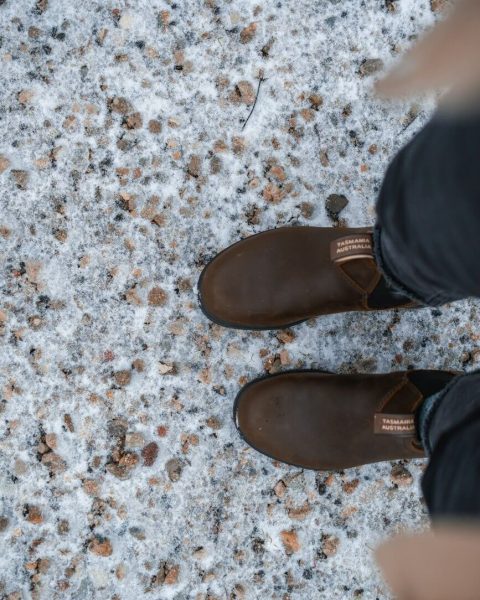
Smooth full-grain leather Chelsea boots are the easiest to live with in winter. The tight surface sheds light rain and slush, takes wax or cream that improves water resistance, and wipes clean after salty streets. It isn't waterproof on its own, especially at the seams, but with regular conditioning it holds up for years. Corrected-grain and heavily coated leathers need less care, though they tend to crease sharply and can't be restored as fully once the finish cracks.
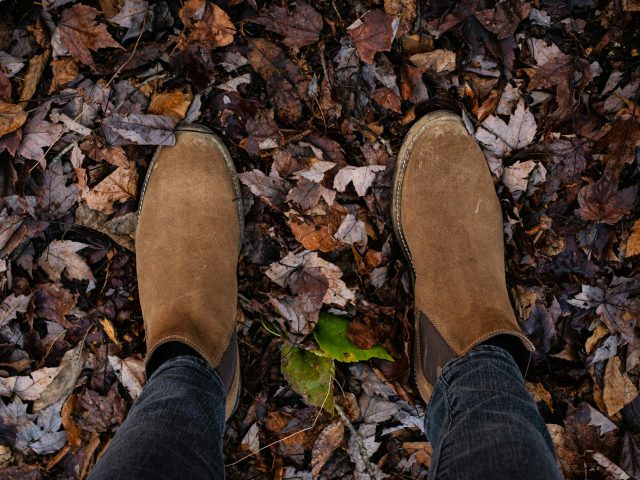
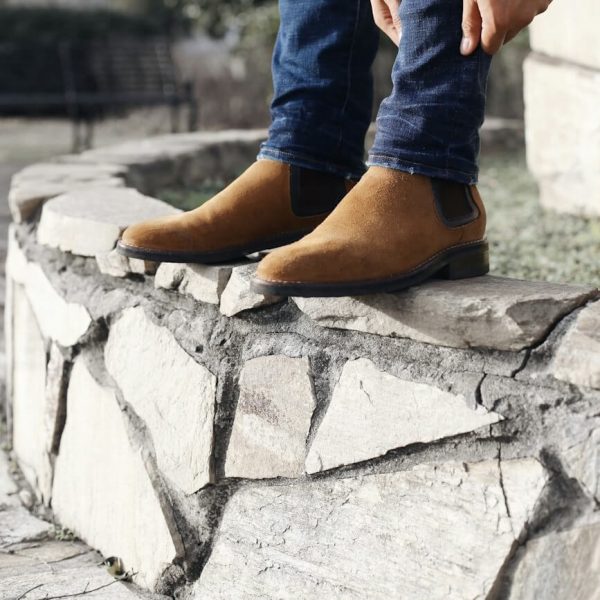
Men's suede Chelsea boots are the riskier pick. Suede's open nap soaks up water and salt, and white tide marks can be hard to remove completely. A protector spray helps it shrug off light moisture, and some suedes are treated for water repellency at the tannery, but neither makes suede a good match for slush. If you love the look, wear it on dry, cold days and keep a smooth-leather pair for wet ones.
Black Chelsea boots are the most forgiving to maintain: scuffs and salt-dulled patches disappear under black cream, and the color works with gray, navy and charcoal winter clothes. Lighter tan and brown leathers can darken unevenly when they get wet or when you apply wax, so test any product on the inside of the heel first.
What actually keeps water out of a pull-on boot
A boot sold as waterproof usually relies on a membrane, a thin breathable layer built into the lining, such as Gore-Tex or a maker's own equivalent. The elastic side panels are the weak point of most Chelsea boots, because water passes straight through the fabric. In a genuinely waterproof design, the membrane or a sealed inner bootie runs behind the gussets as well; a boot with a membrane only in the front will leak at the sides, so check the product details for how the gussets are handled.
Water-resistant is a weaker promise. It usually means treated leather that sheds splashes for a while, which is fine for city slush if you dry and re-treat the boots, but not for standing in a puddle.
Construction decides how long the pair lasts. Goodyear-welted boots have their soles stitched on and can usually be resoled by a cobbler, which makes a higher price easier to justify; stitchdown and Blake-stitched boots are harder to resole, so check that a cobbler has the right tools. Cemented soles are glued; they're lighter and often more flexible, but once the sole wears through, replacing it often costs more than it's worth.
Soles, lining and fit for cold feet
On winter Chelsea boots for men, the sole matters more than anything above it. Leather soles are slippery on ice and wet stone and soak up water, so choose rubber. Look for lugs or a pattern with real depth and channels that push slush out. Press the sole with your thumb: softer rubber generally keeps its grip better in the cold, while very hard, plastic-feeling soles tend to turn slick as temperatures drop.
Warmth comes from the lining. Unlined or thinly lined boots are comfortable indoors but let cold through on long waits outside. Shearling, wool blends and synthetic insulation all add warmth; shearling and wool handle sweat well, while synthetic insulation is thinner and keeps the boot slimmer. Any lining takes up room inside, which affects the size you need.
Try boots on with the socks you'll actually wear, ideally late in the day when feet are slightly larger. A pull-on boot can't be tightened, so the elastic and the heel cup do all the holding. A little heel lift in a new pair usually settles as the leather softens; a heel that slides freely won't improve. Leave room to wiggle your toes, since cramped toes get cold faster.
Warning signs and checks before you pay
Some flaws show the moment you pick up the boot. Elastic that already feels slack will only loosen further. Vague terms such as "genuine leather" with no further detail, or "bonded leather," often point to lower-grade or reconstituted material. Glue smears, gaps where the sole meets the upper and wandering stitching suggest the pair won't survive a wet season.
A few quick checks catch problems that are easy to miss in a mirror:
- Bend the boot: it should flex at the ball of the foot, and a boot that folds at the arch will tire your feet.
- Slide your hand inside and feel for rough seams or a ridge at the heel that will rub through a sock.
- Tug the pull tabs and check that they're stitched into the back seam.
- Lift out the insole if it's removable, which leaves room for a warmer insert later.
- Read the return terms on wear, since some sellers accept returns only on boots tried indoors.
Once you've chosen a pair, treat it before the first snow, while the boots are new and dry, and keep a soft cloth by the door to wipe off salt the same day it lands.