A baby riding in a stroller on a freezing morning sits still, makes little heat of their own and can't tell you their feet are cold. Whatever they wear has to hold warmth without help from movement, which is why the choice between a pramsuit or snowsuit matters more than the label suggests.
For a baby who rides and doesn't yet crawl outdoors, a well-fitted pramsuit over sensible layers usually handles dry cold. An infant snowsuit makes sense once wet snow, slush or ground play come into it. Both share one safety rule: a bulky suit doesn't go under a car seat harness.
Fleece or a shell: how the two suits are built
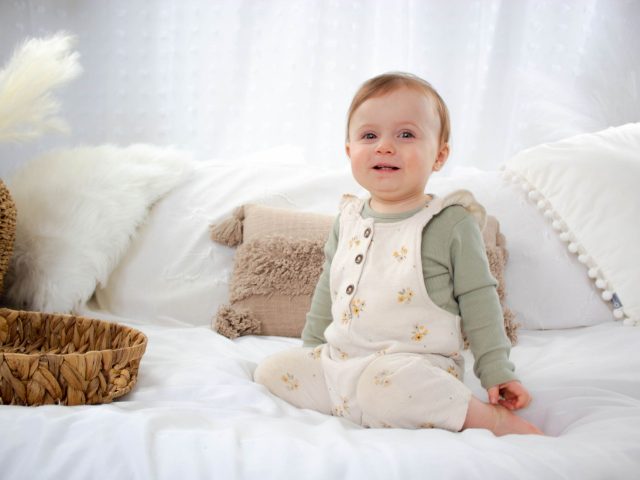
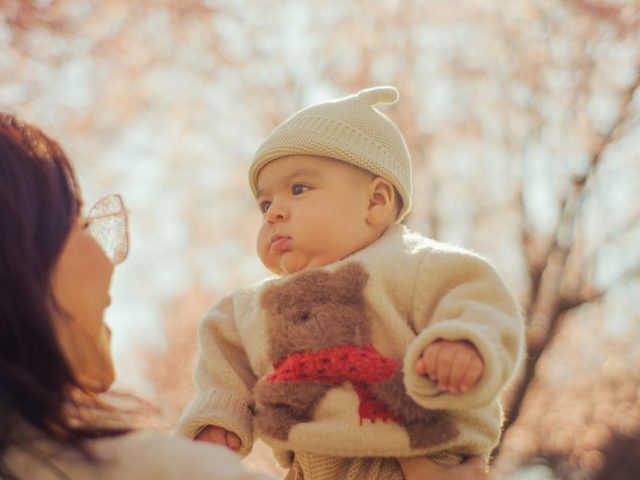
A pramsuit is a one-piece suit made for babies who are carried or pushed. Most are soft fleece, knit or quilted fabric with a hood and a long zip from neck to ankle, and many have fold-over mitts and built-in feet. In American stores the same garment is often sold as a bunting or a fleece suit, so search under those names too.
The weakness is water. Fleece blocks some wind and stays warm when slightly damp, but wet snow or drizzle soaks through it, and a wet suit pulls heat away from the body.

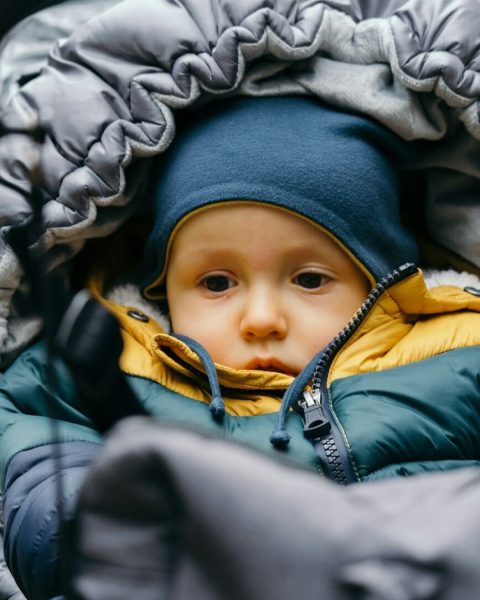
A snowsuit is built for weather. It has an outer shell of nylon or polyester, usually with a water-repellent finish or a waterproof membrane, a layer of synthetic or down insulation, and a smooth lining. That makes it warmer in wind and wet, but also thicker and stiffer, which matters when you're trying to bend a baby's arms into sleeves.
Infant sizes are mostly one-piece. From toddler sizes, many come as a jacket with bib pants, which is easier to take on and off and lets you leave the jacket behind on milder days.
Side by side on warmth, weather and fit
The two suits overlap less than they seem to, because they're designed for different stages and different weather.
| Pramsuit | Snowsuit | |
|---|---|---|
| Outer fabric | Fleece, knit or quilted fabric | Nylon or polyester shell |
| Wet snow and rain | Soaks through unless it has a coated shell | Water-resistant or waterproof |
| Bulk | Light and flexible | Thicker and stiffer |
| Best stage | Newborn to pre-crawler, mostly in a stroller or carrier | Crawlers and toddlers who play outside |
| Dressing | Quick, usually one long zip | Slower; more pieces in two-piece styles |
| Hands and feet | Often fold-over mitts and feet | Sometimes in infant sizes; toddlers usually need separate mittens and boots |
| Washing | Usually machine washable | Check the care label; washing wears down water-repellent finishes over time |
Read the table by what your walks look like. A baby tucked into a stroller with a cover rarely touches snow, so the pramsuit's lack of waterproofing barely matters and its flexibility makes every outing easier. The snowsuit's advantages only pay off when the suit itself meets wet ground or open sky for a long stretch.
A pramsuit covers most stroller walks before crawling
Pramsuits for newborns are about fit as much as warmth. A suit should leave room for a bodysuit and a footed sleeper underneath without squeezing the feet or pulling at the shoulders, but a suit several sizes too big leaves loose fabric and cold air pockets. Newborns grow quickly, so one size up is reasonable; more than that usually isn't.
As a rough guide, dress a baby in one more layer than you'd want yourself in the same weather. On a windy or very cold day, add a stroller footmuff or a blanket tucked over the top, and use a rain cover when it's wet. A pramsuit kept dry under a cover stays warm far longer than one that's been snowed on.
Check warmth on the back of the neck or the chest, not the hands. Cool hands are normal in babies and say little about how they feel overall. A sweaty or hot neck means one layer too many; a cool chest means the opposite.
Take the suit off or open it as soon as you go indoors, into a store, a café or a warm car. Babies overheat fast in heated rooms, and if your baby falls asleep on the walk, take the suit off before laying them down to nap. Overheating is a recognized risk factor for sudden infant death, so a sleeping baby shouldn't stay bundled for outdoor weather inside.
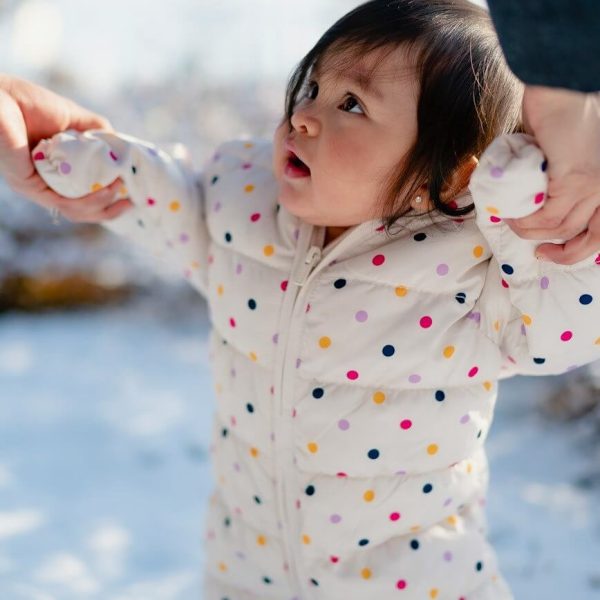
Once your baby sits in snow, waterproofing decides
Water-resistant and waterproof aren't the same claim. A water-resistant snowsuit sheds light, dry snow, but a toddler kneeling or sitting in wet snow presses water through the fabric within minutes. A waterproof snowsuit has a membrane or coating that keeps water out under pressure; fully waterproof ones also have taped or sealed seams so water can't wick through the stitching.
On the label and the garment itself, look for these details:
- "Waterproof" rather than "water-resistant" in the description, and taped or sealed seams
- Cuffs that close around mittens and elastic gaiters or straps that keep leg openings over boots
- A hood that stays put without covering the eyes, ideally removable
- Reflective trim if your walks run into early dusk
For play in wet snow, the shell matters more than the insulation. Synthetic fill keeps more of its warmth when damp and dries faster; down is warmer for its weight but flattens and loses warmth when it gets wet.
A 2T snowsuit serves a different child: one who walks, falls and gets up again. Two-piece styles with bib pants keep snow out at the waist and let you swap the jacket for a lighter one. Buying a size up to last two winters can work if the cuffs adjust, but sleeves that swallow the hands make mittens slip off and falls harder to catch.
Bulky suits don't belong under a car seat harness
Thick, puffy layers compress in a crash, which can leave the harness too loose to hold your child. A snowsuit should come off before you buckle in. A thin fleece pramsuit may be acceptable, but test it rather than assume.
The pinch test shows whether a suit is too bulky: buckle your baby in wearing the suit and tighten the harness until you can't pinch any strap at the collarbone. Without loosening the straps, take your baby out, remove the suit and buckle in again. If you can now pinch a fold of strap, the suit is too thick for the harness.
For the drive, buckle your baby in normal clothes and lay the suit or a blanket over the harness. Inserts and liners that sit between the baby and the seat weren't tested with your seat unless its maker says so; check the seat's manual before using one.
Before the first cold outing, practice the full routine at home: suit on, suit off, buckle in, blanket over. Ten minutes of rehearsal in a warm hallway beats learning the sequence in a freezing parking lot.