A baby riding in a stroller on a cold morning barely moves, so the base layer against their skin does more work than most parents expect. Sweat from a warm car, drool or a leaky diaper all end up in that first layer, and what the fabric does with the moisture decides whether the baby stays comfortable or starts to chill.
For real cold and longer outings, merino wool is the better choice for most babies, because it stays warm when damp. Cotton suits short, dry trips and indoors, where softness, low cost and easy washing matter more than how it behaves when wet.
Damp fabric is what chills a baby
Cotton fibers soak up water and hold on to it. Once a cotton base layer gets damp, the knit flattens, the air pockets that kept the baby warm collapse, and the wet fabric draws heat from the skin as it slowly dries. On a quick, dry walk that rarely happens. On a two-hour outing that starts with a sweaty car ride, it often does.
Wool handles moisture differently. A wool fiber takes up water vapor inside the fiber while the surface still feels fairly dry, so the fabric keeps much of its loft. Wool even releases a little heat as it absorbs moisture, though the effect is small and no substitute for proper outer layers.

Merino is the fine-fibered wool used in most baby base layers. Its fibers are thin enough to bend against the skin instead of prickling it, which is why a merino base layer feels nothing like a scratchy old sweater.
The trip between heated rooms and winter air is hard on any fabric. A baby dressed for the cold sweats quickly in a warm store or bus, then cools fast back outside. Wool copes with that cycle far better than cotton.
How wool, cotton and synthetics compare
Many baby thermals are also made from polyester or blends, so it helps to see the three fiber types together.
| Merino wool | Cotton | Polyester and other synthetics | |
|---|---|---|---|
| Warmth when damp | Keeps much of it | Loses most of it | Keeps some |
| Feel on skin | Soft if fine; coarse wool can itch | Very soft | Smooth, can feel clammy |
| Drying speed | Moderate | Slow | Fast |
| Odor after wear | Resists odor | Washes out easily | Tends to hold odor |
| Washing | Cool water, gentle cycle, no high heat | Easy, tolerates hot water | Easy, low heat |
| Durability | Thin knits can wear through | Hard-wearing | Hard-wearing, may pill |
Merino costs more per piece than cotton, and that stings when a baby outgrows a size within months. Synthetics dry fastest, but they can feel clammy against a baby who sits still and sweats, so they tend to suit active older kids better than a baby in a stroller.
Itch, eczema and the washing machine
Itch depends mostly on fiber thickness. Coarse wool prickles because stiff fiber ends press into the skin; fine merino bends away. Some makers state fiber diameter in microns, and a lower number means a softer fabric. If nothing is stated, rub the fabric on the inside of your wrist or your neck before buying.
If your baby has eczema or very reactive skin, ask your pediatrician before switching fabrics, and try a single merino piece on a short outing before buying a full set.
Washing decides whether merino survives the winter. Heat and agitation together felt wool, so a top washed hot and tumble-dried can come out smaller and stiff. Many merino baby clothes are treated to be machine washable on a cool gentle or wool cycle; check the care label on each piece, use a wool-safe detergent and dry it flat. Cotton goes in with the regular laundry and handles hot water, which helps after a diaper blowout.
Blends sit in between. Merino with a little nylon tends to wear longer, while merino-cotton blends feel soft but pick up some of cotton's slow drying.
Which base layer suits your baby's outings
How long your baby stays out, and how likely the first layer is to get damp, matter more than the temperature alone.
- Long cold outings. A hike with a baby carrier, a morning at the sledding hill or a day at a winter market calls for a wool base layer, top and leggings or a one-piece, under fleece and a windproof outer layer.
- Short, dry stroller walks. A cotton base layer is fine for a quick trip around the block in mild weather, as long as you change it once it gets damp.
- Daycare and tight budgets. Keep cotton for everyday wear and buy one or two merino sets for the coldest outdoor days.
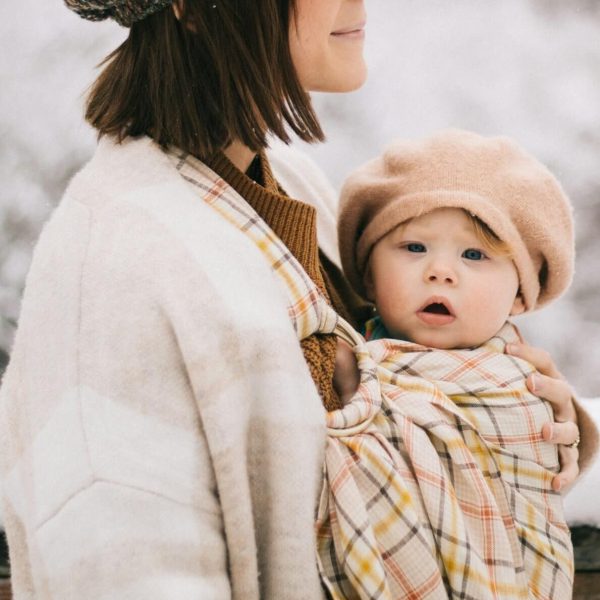
- Babywearing. Your body heat warms the torso, so a lighter merino layer usually works there, while legs, feet and head sticking out of the carrier need extra cover.
- Car trips. Bulky snowsuits shouldn't go under a car seat harness, because the padding compresses in a crash and leaves the straps loose. A thin base layer and fleece under the harness, with a blanket or coat over the buckled straps, keeps the fit snug.
A thermal base layer can be wool, waffle-knit cotton or polyester, since the word describes the knit more than the fiber. Read the fiber content before counting on one for wet or very cold days: waffle-knit cotton traps air well while dry and loses that advantage once it soaks through.
Check warmth at the back of the neck
Feel the back of your baby's neck or chest to judge warmth. Warm and dry means the layers are right; sweaty means too many, which is exactly when a cotton layer starts working against you. Hands and feet often feel cool even when a baby is warm enough, so they're a poor guide.
A rough starting point many pediatricians give is one more layer than you'd wear yourself, adjusted after checking. Change the layers as soon as you notice any of these signs.
- Flushed cheeks, damp hair or fast breathing point to overheating, so take off a layer.
- Fussiness and a cool chest point to cold, so add a layer or head indoors.
- Cold, bright red skin, or a baby who turns unusually quiet and floppy in the cold, can signal dangerous chilling: get indoors and call your pediatrician or emergency services.
When you come back inside, take off any base layer that feels damp instead of letting it dry on your baby; a spare set in the diaper bag makes that easy on long days out.