A sweater dress can look perfect on the hanger and go wrong by lunchtime. The hem drops, the seat bags out after a commute, or a thin knit catches on every curve while static pins it to your tights. Most of that is predictable before you buy: the fiber blend, how tightly the yarn is knitted and how heavy the dress is tell you more than the photo or the size label.
Knits that hold their shape usually cost more or need gentler care, and easy-care ones are more likely to stretch, pill or cling. Decide which compromise you can live with before you compare dresses.
Fiber content decides how the dress hangs by afternoon
Read the fiber label before anything else. In the US, most clothing must carry a label listing its fibers by percentage, so the information is on the tag even when the hangtag says nothing useful.
Wool, including merino and cashmere, has a natural crimp that lets it stretch and spring back. A wool knit dress that bags at the seat after a long meeting usually recovers after resting flat overnight. The cost is care: most wool needs hand washing or a wool cycle, and soft cashmere pills where it rubs, under the arms and along the sides.

Cotton feels soft and breathes well but has little elastic recovery. A heavy cotton sweater dress tends to lengthen as you wear it. Viscose, rayon and other wood-based fibers drape beautifully, which is exactly the problem: they are heavy for their bulk and weaker when wet, so a mostly viscose dress can grow on the hanger and stretch badly in the wash.
Acrylic and polyester are light, inexpensive and usually machine-washable, and they seldom sag. Many acrylic knits pill quickly, though, and synthetics build static in dry, heated rooms, which is what makes a dress cling to tights. Nylon in a blend adds strength where the fabric rubs.
A few percent of elastane (spandex) helps almost any blend snap back. Without it, a cotton or viscose knit relies on fibers that don't recover well. For a dress you'll wear every week through winter, a wool-rich blend with some nylon is worth the higher price and the hand washing; an all-acrylic dress makes sense for a few wears a season.
Gauge and stitch: what your hands can tell you
Gauge is how many stitches fit into an inch of fabric. Fine-gauge knits look smooth and close to jersey, while chunky knits show every stitch. A fine gauge looks sleeker but shows the lines of whatever is underneath and clings more readily, especially in synthetics. A chunky knit skims the body, but a long one hangs a lot of weight from your shoulders.
Hold the fabric up to a light. If you can see through it clearly without stretching it, it will thin out where you sit and show underwear lines. A dense knit that still feels soft is the one worth paying for.
Then stretch a section of the skirt sideways for a few seconds and let go. It should pull back to its original width almost at once. If it stays wider or ripples, expect the seat, knees and elbows to bag within a few wears.
Rib knits are meant to hug, so a ribbed fitted sweater dress will follow every curve. Size it for comfort: squeezing into a smaller size stretches the ribs flat, and flattened ribs lose their pull sooner. Cables and textured stitches are thicker and more forgiving over the hips and stomach.
Shoulders, length and neckline set the fit
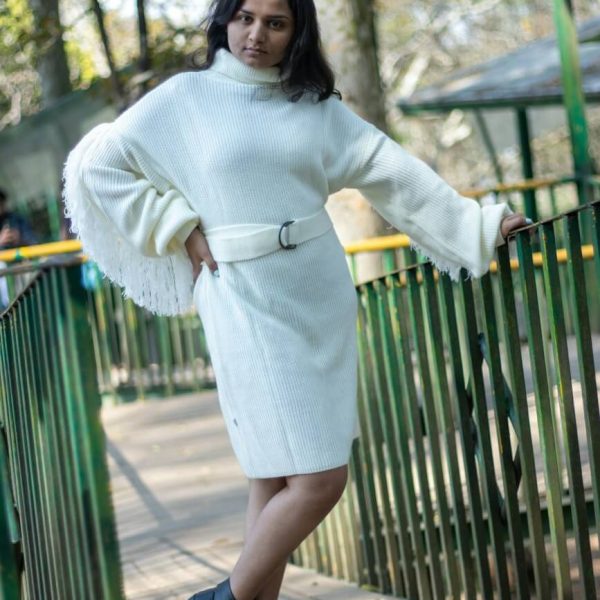
The shoulders carry the whole dress. The seam should sit at the edge of your shoulder; if it drops lower, the weight drags the neckline and hem down with it. On heavier knits, look inside for a taped shoulder seam, a strip of fabric sewn along it that stops the seam from stretching.
Length tends to grow in heavy knits, especially in cotton and viscose. If a midi sweater dress already reaches the longest point you like when you try it on, it may end up longer after a day of wear. A ribbed hem pulls in and can ride up when you walk; a plain hem hangs more evenly.
A turtleneck sweater dress needs a collar that stands without folding into creases. A double-layer or ribbed collar holds its height better than a single thin layer. It should also pass over your head without being forced wide, since a stretched neck rarely recovers in cotton or viscose.
Size charts for a women's sweater dress usually list bust, waist and hip measurements. Check the hip and the length as well as the bust, because a knit that fits on top can strain across the hips. Sit down in the dress if you can: fabric pulled tight across the seat when seated is where it will bag first. If cling is the worry, a slip or a lined dress keeps the knit from catching on tights.
Faults on the rack that predict a short life
A few faults are visible before you buy, and each suggests a dress that won't keep its shape long:
- Pilling or fuzz on a dress that hasn't been worn yet.
- Side seams that twist toward the front or back, which tends to get worse with washing.
- Wavy, puckered seams, loose threads or stitches that run when you tug a snag.
- A heavy, loose-knit cotton or viscose dress with no elastane and no wool in the blend.
None of these is fixed by washing or blocking, so skip the dress even when the price is low.
Five checks at the fitting room or product page
A minute in the fitting room or a look at the product page catches problems the fabric alone won't show:
- Match the care label to how you actually do laundry; dry cleaning adds a running cost to a dress you'll wear often.
- Try it with the tights, slip or leggings you plan to wear and walk around, since static and cling show up in motion.
- Raise your arms and check that the sleeves and hem settle back into place.
- Feel the inside of the neck and cuffs if the dress will touch bare skin; some wools itch where a blend wouldn't.
- When buying online, confirm how long you have to return it and whether returns cost anything, because knits often need trying on.
Once it's home, store the dress folded on a shelf or in a drawer instead of on a hanger. A heavy knit left hanging for weeks stretches at the shoulders and lengthens, and wool dresses keep their shape best when washed cool and dried flat, pressed back into shape while damp.