Stand at a bus stop in a January wind and you learn fast what your hat is for. Men's winter hats fall into three main shapes: the knit beanie, the wool flat cap and the lined trapper hat with ear flaps. Each handles cold, wind and a tailored coat in its own way, and the right choice depends more on how harsh your winter gets and how long you spend out in it than on looks.
The short answer: a beanie covers the widest range of days, a flat cap suits milder cold and smarter clothes, and a trapper hat is worth its bulk once the wind chill drops well below freezing.
How the three hats compare at a glance
The biggest differences are in what each hat covers, since a warm crown does little for you if your ears are exposed to the wind.
| Beanie | Flat cap | Trapper hat | |
|---|---|---|---|
| Warmth | Moderate to high, depending on yarn and knit | Low to moderate | High |
| Ear coverage | Yes, when pulled down or cuffed over the ears | No, apart from styles with fold-down flaps | Yes, with flaps that usually fasten under the chin |
| Wind protection | Low in loose knits, better in tight knits or with a fleece lining | Crown only | High, especially with a tightly woven or leather shell |
| Brim | None | Short front brim | Front flap or peak on many designs |
| Packability | Rolls into a pocket | Folds flat but can crease | Bulky |
| Fit | Stretches to fit most heads | Sized by head circumference | Usually sized, some with an adjustable strap |
| Looks right with | Parkas, casual jackets, sportswear | Wool overcoats, pea coats, tweed | Parkas, workwear, outdoor gear |
Within each type, the material matters as much as the shape. Wool, including merino, keeps much of its insulating value when it gets damp, so it stays comfortable through wet snow and a sweaty walk. Acrylic is cheaper and holds its shape, but it breathes less and can feel clammy once you warm up. Cotton knits are the weak choice for real cold, because wet cotton pulls heat away from your head. Check the fibre content on the label before you judge a hat by its looks.

A beanie for men who want one hat for most days
If you buy only one hat, make it a beanie. It covers your ears, fits under a parka hood or a bike or ski helmet, and stuffs into a coat pocket when you step indoors.
The style changes how warm it is. A cuffed beanie hat has a folded band that doubles the fabric over your ears and forehead, which is where you feel the cold first. A slouchy beanie leaves extra fabric at the back, so it looks relaxed but keeps less warm air close to your head. A short fisherman beanie sits above the ears and is mostly a style choice for mild days.
Wind is the beanie's weak point. Open cable knits let gusts straight through, while a tight knit or a fleece band sewn inside blocks much more. Hold a beanie up to the light: if you can see through the stitches easily, expect cold ears on a windy day.
If wool makes your forehead itch, try merino or a hat with a soft lining band. Before buying, pull the beanie down as far as it goes; it should cover your earlobes without riding up when you turn your head.
The flat cap works best on cold, dry days in town
A flat cap keeps your crown warm and looks right with an overcoat in a way a knit hat rarely does. It doesn't cover your ears, though, so on its own it suits cool to cold days rather than deep winter. Pair it with a scarf you can pull up, or earmuffs, when the temperature drops.
Most winter flat caps are wool, often tweed. Dense wool tweed sheds light drizzle for a while and the short brim keeps snow and low sun off your eyes, but steady rain soaks through. A quilted or satin lining adds a little warmth and stops coarse wool from scratching your forehead. The newsboy cap, its fuller cousin with a panelled crown and a button on top, works the same way.
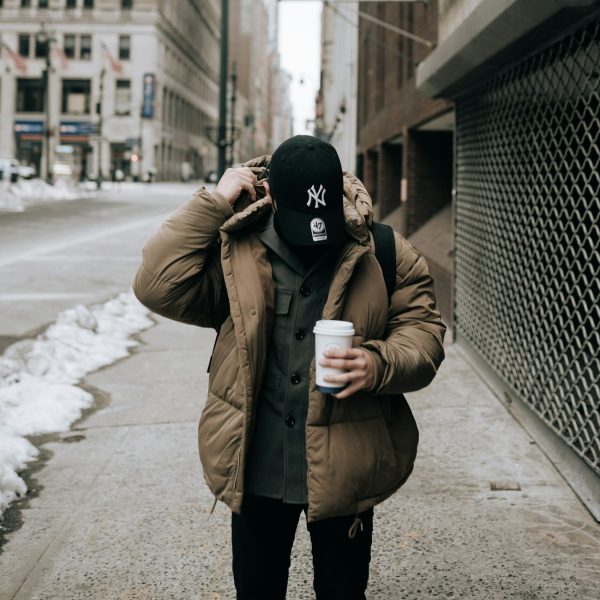
Fit matters more than with a beanie, because a flat cap doesn't stretch. To find a men's flat cap that stays put in the wind, measure around your head just above the ears and eyebrows, then match that measurement to the maker's size chart. Too loose and it lifts off in a gust; too tight and it leaves a red line across your forehead. Some styles have ear flaps that fold out from inside the band, which is worth looking for if you like the look but face colder winters.
A trapper hat earns its bulk in hard cold
A trapper hat is built for the days when a beanie isn't enough: long waits outdoors, open country, northern winters with biting wind. The flaps cover your ears, cheeks and the back of your neck, and on most designs they fasten under the chin with a strap or ties. On milder days you can tie them up over the crown.
Linings are usually shearling, fur, faux fur or thick fleece, and the shell is often nylon, leather or wool. Nylon shells are often water-resistant and easy to wipe clean. Leather and suede look good but need protecting from soaking and road salt.
The downsides are real. A trapper hat is bulky, doesn't fit in a pocket and can make you overheat on a brisk walk or the moment you step into a shop. It also has a strong outdoor look that sits oddly with a tailored coat.
Check three things before choosing one. The flaps should reach below your earlobes and meet under your chin, the fastening should work with gloves on, and the lining should run through the flaps rather than stopping at the crown.
Matching the hat to your winter
- If your winter is mild and you mostly walk short distances in town, a flat cap with a scarf is enough, and it looks right with work clothes.
- If your winters are cold and varied, and you drive, cycle or use public transport, a wool beanie for men covers almost every day and fits under a helmet.
- If you spend long stretches outside in wind below freezing, walking a dog at dawn, working outdoors or watching games from the stands, a trapper hat is the one that keeps your ears comfortable.
Many men end up with two: a beanie for everyday cold and either a flat cap for smarter days or a trapper hat for the worst weeks. Before you order any sized hat, measure your head with a soft tape and keep the number on your phone.