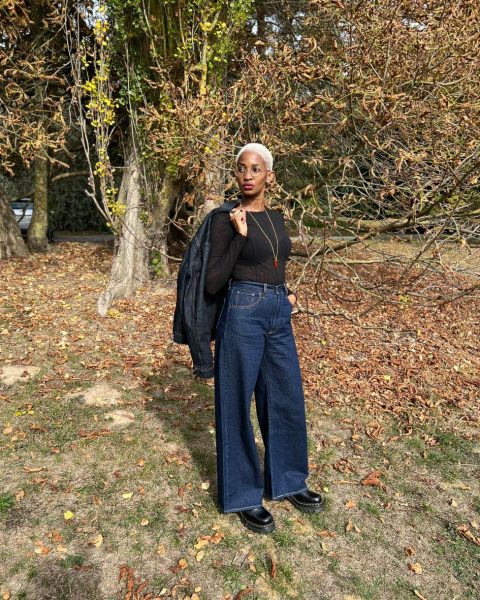
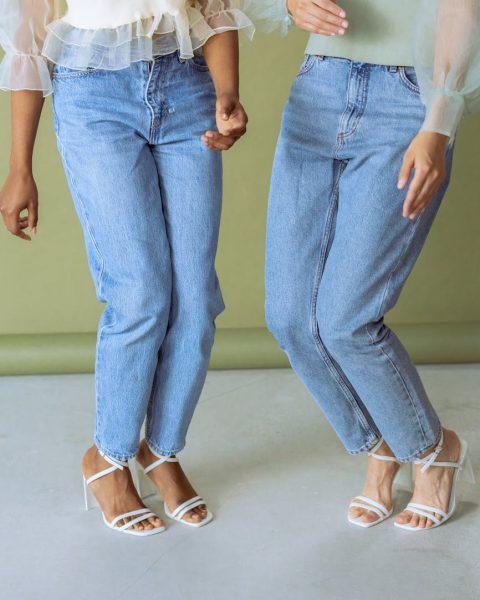
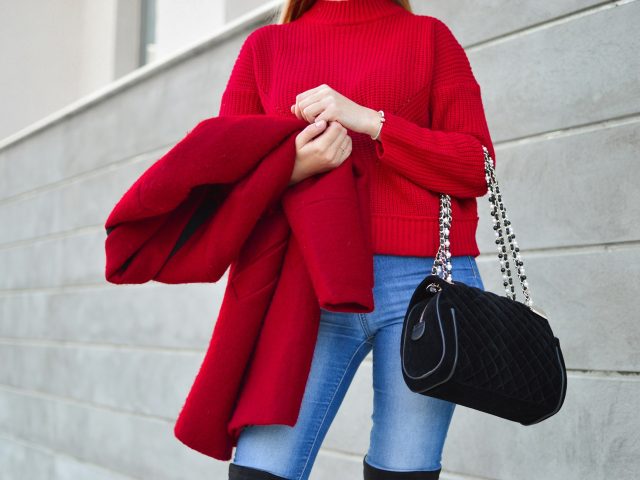
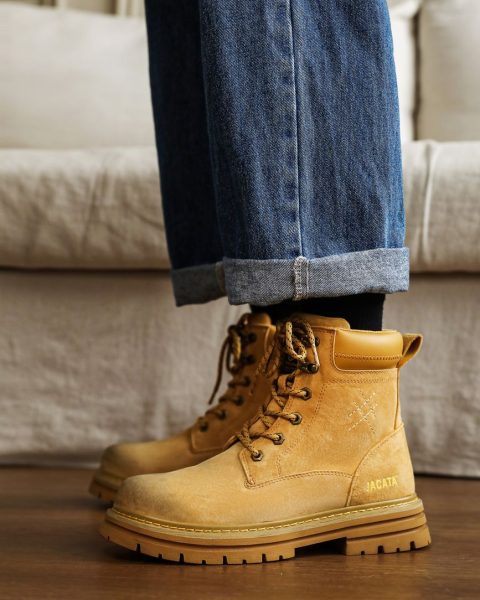
A deep cuff turns the hem of your jeans into a feature: a band of lighter denim, sometimes showing the selvedge edge, sitting right where your boots or flats begin. In winter it also goes wrong easily, when the cuff collides with a boot shaft, fills with slush or leaves a stretch of cold, bare ankle above a loafer.
Where the cuff lands decides almost everything. Fold your jeans while wearing the shoes you plan to pair them with, and start with a leg that can carry the extra fabric. Wide leg jeans and straight cuts in sturdy denim handle a deep turn-up far better than slim, stretchy pairs.
Choose denim and a cut that can hold a deep fold
A wide cuff needs fabric with some body. Rigid or mostly cotton denim folds into a crisp band and stays there, while jeans with a lot of stretch tend to roll, slide down and look rumpled. Check the fabric label: the less elastane in the blend, the better a cuff usually behaves.
The leg shape matters just as much. On a wide leg, the hem already has room, so a deep cuff adds a little weight at the bottom and helps the denim hang straight. A straight leg works too. A tapered or skinny leg narrows so much at the ankle that a wide fold has nowhere to sit, and it puckers into a ring.

A cuff also uses up length. If your jeans already stop at the ankle bone, there's room for a narrow roll at most. Longer pairs give you room for a turn-up of roughly two to three inches, a rough guide that keeps the band in proportion without cropping the leg too much.
The rise affects the balance of the whole outfit. High-waisted wide leg jeans offset the visual weight at the hem, especially when you tuck in a sweater or wear a short jacket that shows the waistband.
Set the cuff against the top of your boots
With ankle boots, the cleanest look has the cuff ending just above the boot, close enough that only a sliver of sock shows, or none at all. Check in a mirror: if the cuff rests on the shaft, it pushes the denim out into a shelf; if a wide gap shows, the jeans look as if they shrank in the wash.
Match the depth of the cuff to the bulk of the boot. Chunky lace-ups and lug-sole boots carry a heavy, deep cuff well because their weight matches the fold. Slim Chelsea boots look better with a narrower band, set slightly higher so the boot's clean line shows.
Wearing jeans with boots doesn't always call for a cuff. With a very wide leg, you can let the hem fall over the boot and leave it unfolded; if you keep the cuff, it has to sit clear of the shaft, or the fold will catch on the boot with every step.
Knee-high boots and a wide cuff rarely work together. The cuff can't go over the shaft, and stuffing a wide leg inside the boot leaves lumpy folds at the knee. Keep tall boots for slimmer jeans, skirts or dresses.
Whatever shows between cuff and boot should look intended. Wool socks in the color of the boot or a shade that picks up the denim make that gap part of the outfit and keep your ankles warm.
Flats need a visible ankle that's dressed for cold
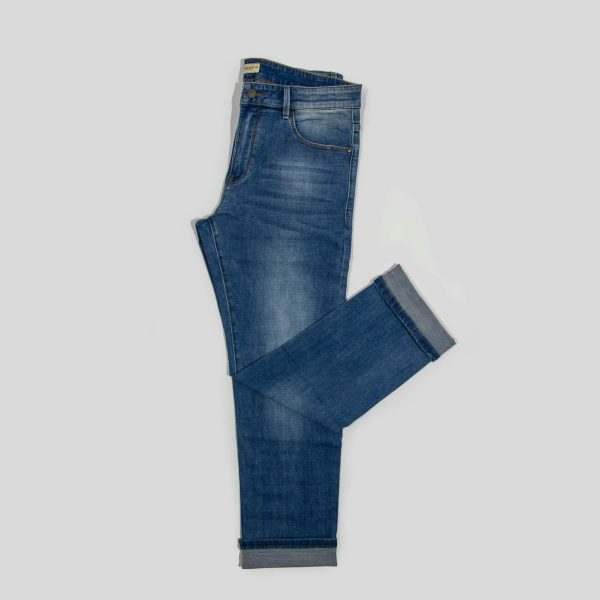
Flats show a cuff off best, since nothing competes with it. Loafers, ballet flats and Mary Janes look right when the cuff ends at or just above the ankle bone.
In winter, that leaves skin exposed, so cover it on purpose. Fine-knit socks in a contrasting color or opaque tights look like a styling choice, while bare ankles or thin no-show socks leave you cold on the walk to the train.
Flats also take away the lift a heel gives. High-rise wide leg jeans help here by lengthening the line from waist to hem. If the mirror says your legs look short, roll the cuff narrower before you give up on the shoes.
Fold and set the cuff in five steps
A cuff that's folded evenly and pressed will stay level through a day of walking, sitting and climbing stairs.
- Put on the jeans and the shoes you'll wear with them, and stand straight in front of a mirror.
- Turn the hem up once to the depth you want, keeping the outer side seam lined up so the fold doesn't twist around the leg.
- Fold a second time over the first if you want a narrower, firmer band; the second fold also tucks the original hem edge out of sight.
- Take the jeans off and press the fold with a steam iron, using a pressing cloth on dark denim so the fabric doesn't turn shiny.
- Lay the legs side by side to check that both cuffs match, then put the jeans back on and walk and sit for a minute to see that the cuff stays put.
If stretch denim keeps slipping, a tailor can add a small tack stitch at each side seam to hold the fold. It's easy to snip out later if you want a full-length hem again.
Keep slush and road salt out of the fold
A cuff is an open pocket at ground level, and it collects snow, slush and road salt. When you get home, brush it out and turn the cuff down so the inside can dry; salt left to dry in the fold can leave white marks on the denim. Wipe those marks with a cloth dampened in plain water before the next wash.
On slushy days, set the cuff a little higher than usual so it clears the spray that kicks up above your boots.