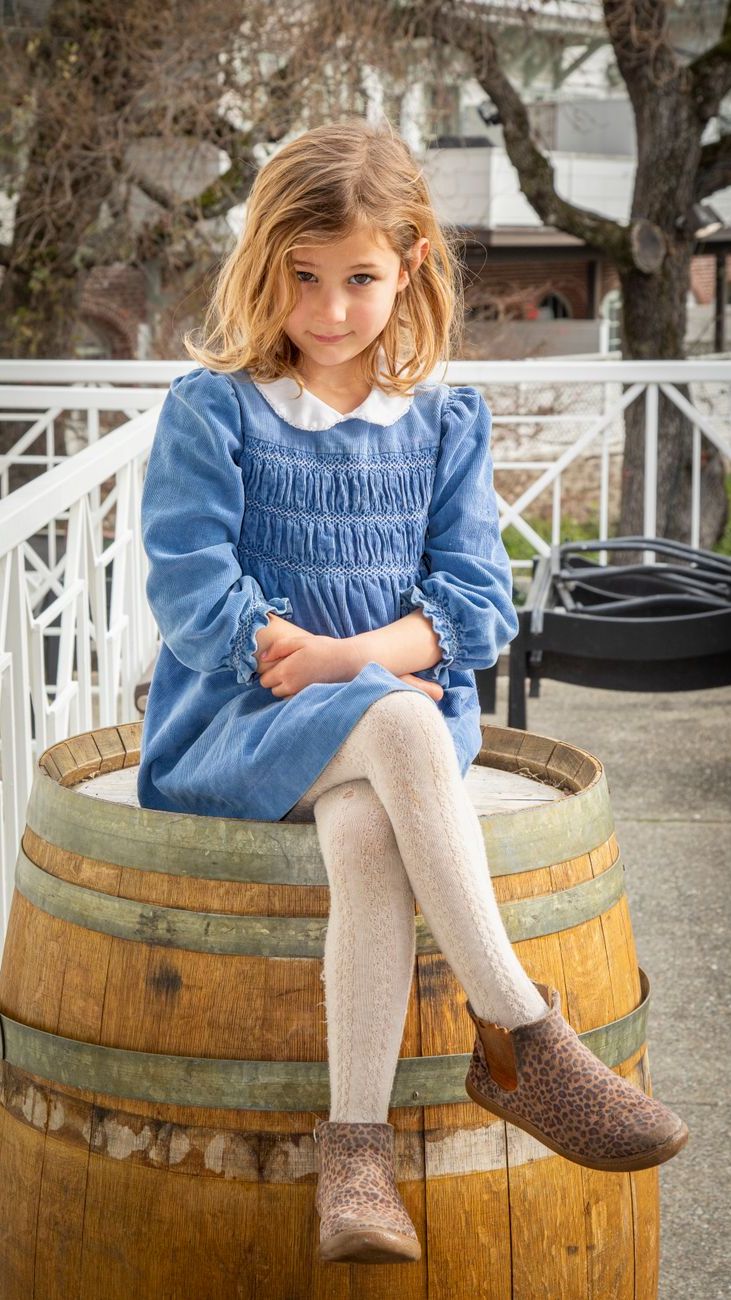
Fleece-lined tights for girls: warm legs under skirts and dresses
Fleece-lined tights for girls: warm legs under skirts and dresses
Bare knees at the bus stop are the usual price of a favourite dress in January, unless the girls' tights underneath are lined. Fleece-lined tights have a brushed layer on the inside that traps warm air against the skin, so skirts and dresses can stay in the rotation on cold mornings.
A good pair of winter tights has the right amount of lining for her day, a fit she won't tug at all day, and a build that holds up to weekly washing.
Match the lining to how cold her days really get
Start with where she spends the cold hours. A girl who walks to school, waits for a bus or plays outside at break time needs a thick, plush lining. One who goes from a warm car to a heated classroom may be too hot by mid-morning in the same pair. Synthetic fleece holds heat well but doesn't handle sweat the way wool does, so an overheated child ends up clammy, then chilled once she's back outside.
For mostly indoor days, ordinary opaque winter tights or a light brushed lining are often enough, with her coat and boots doing the work outdoors. Save the heaviest fleece for sledging, outdoor games, long walks and trips to colder places. Many families keep two weights in the drawer: a thinner pair for school and a thick pair for weekends outside.
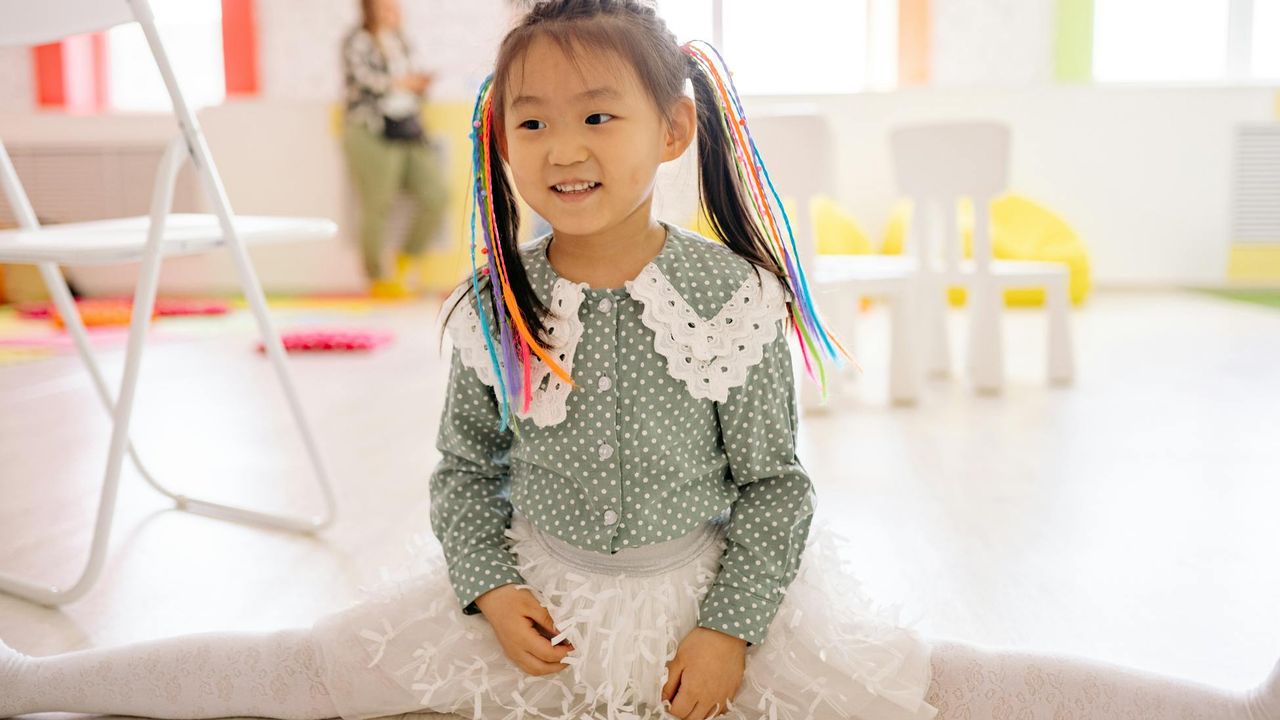
Think about the outfit, too. Some fleece-lined styles have a sheer-looking, skin-tone outer layer meant to pass for sheer tights under a party dress; they're warm, but the effect only works on the right skin tone. For school and everyday wear, solid opaque colours such as black, navy and grey hide the lining completely and go with uniforms.
Fit and sizing decide whether she'll wear them
Fleece-lined thermal tights are thicker and give less than ordinary tights, so a size that's slightly off becomes a pair she refuses to wear. Brands size children's tights by age, height, weight or a mix of these, and their charts don't line up with one another. Check the chart against her actual height and weight rather than her age.
Between two sizes, go up if she's tall for her age. Tights that are too short in the body pull the crotch down between her legs and drag the waistband below her waist, and she'll spend the day hitching them up. The cost of sizing up is wrinkling at the knees and ankles, which shows more in thick fabric than in thin nylon. A little bagging at the ankle disappears under boots; folds under the foot rub and cause blisters.
Look closely at the waistband. A wide, soft band that lies flat stays comfortable through a school day, while a thin, exposed elastic digs in every time she sits on the floor. A gusset, ideally lined with cotton, gives room at the crotch and breathes better than the rest of the garment.
Feet need their own check. Fleece in the foot adds bulk inside shoes, and winter boots or school shoes that fit well with socks can turn tight. Try her usual footwear with the tights on before cutting off the tags. Footless styles avoid the problem entirely and survive a growth spurt better, since leg length matters less, though they need socks and leave a gap at the ankle if the socks are short.
What the fabric is made of, and what each choice costs
Most fleece-lined tights pair a knit outer layer of nylon or polyester, with spandex for stretch, with a brushed polyester lining. The fibre label lists the blend, but the lining is what you're paying for, so feel it before you look at anything else.
Each type of warm tights trades warmth against something else:
- Plush fleece lining gives the most warmth. In exchange it's bulky, builds static in dry winter air and can feel hot indoors, and cheaper versions mat and pill after a few washes.
- Thin brushed lining is less warm but fits under close-cut dresses and inside snug shoes, which makes it the easier pick for heated classrooms.
- Unlined wool-blend or cotton-rich tights cope better with the switch between cold outdoors and warm rooms. Wool blends can feel scratchy on sensitive skin, usually cost more and need gentler washing.
Stretch matters more than it seems. Too little spandex makes thick tights hard for a young child to pull on by herself, and the knees bag out by afternoon. A pair that springs back when you stretch the leg and let go will keep its shape longer.
Denier measures the thickness of the yarn, not the depth of a brushed lining, and some packets print very large figures as a selling point. Treat it as a rough hint at most and judge by the thickness and softness of the lining.
Signs a pair won't last the winter
Rub the lining between your fingers if you can see or touch it. Loose fluff in the packet or fibres that come away on your hand mean it will pill and mat quickly. Check the seams at the toe and crotch: a thick, rough ridge will press into her skin, while flat, neat seams go unnoticed.
Stretch a section of the leg gently over your hand. If the outer knit turns see-through and the lighter lining shows through it, the tights will look faded and worn at the knees as soon as she bends them. A lining that thins out or stops well above the ankle is another sign of a corner cut.
Be wary of a single size labelled for a wide age span, since a one-size pair rarely fits a small six-year-old and a tall nine-year-old equally well. A strong chemical smell isn't a reason to reject a pair, but wash it before the first wear.
Checks before you buy, and care after
A few points are easy to miss at the shop shelf or on a product page:
- Read the care label: if it says hand wash only, decide honestly whether that will happen.
- Count how many pairs a school week needs, allowing for days between washes.
- Check the return terms, since some shops won't take back opened hosiery.
- Note the fibre content if she reacts to wool or certain dyes.
- With dark colours, ask whether new tights may rub dye onto light shoes or upholstery until they've been washed.
Care decides how long the lining stays soft. Turn the tights inside out, wash them cold in a mesh bag and hang them to dry: high tumble dryer heat weakens spandex and flattens fleece. For the first pair, buy one in her measured size, have her wear it with her usual winter shoes for a morning, and size the rest from there.